Key takeaways
Format effectiveness depends on product complexity, audience expectation,s and funnel position today
Live action builds credibility through real people, environments, and authentic demonstrations consistently
Animation simplifies abstract workflows, technical systems, and invisible processes clearly for viewers
Hybrid demos balance human trust with visual explanation for enterprise buyers globally
Strategic format choices improve conversions, scalability, and long-term video ROI growth
In the USA market, choosing between live vs animated demo videos is not driven by trends or visual style. Buyers care about clarity, trust, and relevance to their decision stage. A physical product benefits from seeing it used in real environments. A complex SaaS or AI platform needs visuals that simplify workflows. USA decision makers evaluate demo videos based on product type, audience maturity, and how close the buyer is to conversion.
According to Vidico’s video marketing insights, 91 percent of businesses use video as a core marketing tool, and 88 percent of marketers report positive ROI from video content when aligned with buyer intent. This article helps decision makers choose the right demo format based on real buying behavior, not assumptions.
Why the “Live vs Animated” Debate Matters for USA Buyers in 2026
USA B2B and B2C buyers consume demo videos at very different stages of the funnel. Early-stage buyers want fast understanding without heavy detail. Late-stage buyers want proof, reassurance, and confidence before committing. Some products require real-world demonstrations to feel credible. Others need visual simplification to explain complex systems. This makes format choice a strategic decision tied directly to buyer intent, not a creative preference.
Decision fatigue further increases the importance of choosing the right format. Buyers face constant information overload and shorter attention spans. As marketing expert Jay Baer says, “Relevance beats creativity when buyers are overwhelmed.” A well-matched demo format reduces friction, improves clarity, and helps buyers move forward instead of disengaging mid-journey.
Understanding Live Action Demo Videos
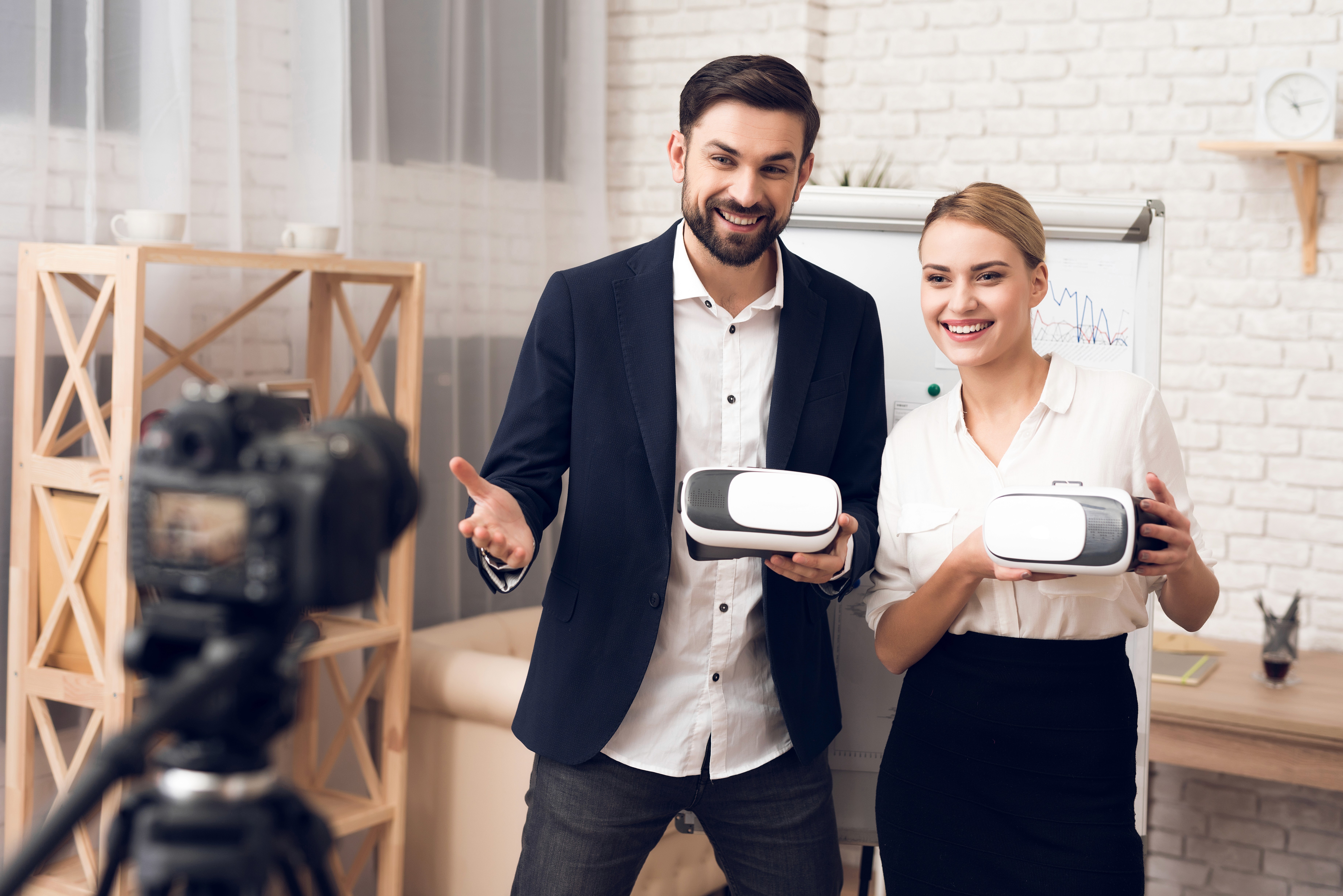
Live action demo videos focus on realism and credibility by showing products in real environments with real people. Within professional video production services, this format is often chosen when trust, authenticity, and visual proof directly influence buying decisions, especially in high consideration USA markets.
What Is a Live Action Demo Video?
A live-action demo video shows a product or service being used in real-world situations. It features real people, real locations, and actual products instead of illustrations or animations. This format captures natural movements, facial expressions, and unscripted moments that feel authentic. Live action demos help viewers understand how a product looks, works, and fits into everyday use. They are especially effective when buyers need visual reassurance before making confident decisions.
Where Live Action Demo Videos Perform Best in the USA Market
Live action demo videos work best when buyers need proof, realism, and usability before converting. These are the strongest conversion-focused use cases:
Physical consumer products: Shows real handling product size, texture, and usability, helping buyers visualize ownership and reduce hesitation during high-intent purchasing moments on product pages.
Industrial equipment: Demonstrates scale safety and real-world operation, building confidence for technical buyers evaluating reliability, performance, and long term investment value.
Healthcare and medical devices: Builds trust through authentic demonstrations, compliance visibility, and real environments critical for regulated industries and high-risk decision-making.
Real estate and construction: Displays space materials workflow and craftsmanship clearly, helping buyers imagine outcomes and feel confident committing to large investments.
Enterprise sales landing pages: Reinforce credibility using real teams and environments supporting late-stage buyers seeking proof before signing contracts.
Why Live Action Builds Trust Faster
Human presence plays a major role in trust building. Seeing real people interact with a product creates emotional connection and authenticity. Facial expressions, body language, and tone help buyers feel reassured that the product works as promised. This human element is difficult to replicate through visuals alone.
Founder-led demos, customer testimonials, and team walkthroughs further strengthen credibility. Buyers feel more confident when real stakeholders explain value and outcomes. In late-stage buying decisions, live action demos often remove final doubts and support faster conversions by reinforcing legitimacy.
Limitations of Live Action Demo Videos
While effective live action demos are not always the best solution for every product or stage. These are the main practical limitations to consider:
Higher reshoot costs: Any product update script change or mistake often requires full reshoots, increasing budget timelines and overall production complexity.
Location and talent dependency: Availability of locations, actors, and crews can slow production and limit flexibility when schedules change unexpectedly.
Harder to update frequently: Frequent product changes make live action demos less scalable compared to easily editable animated alternatives.
Less effective for abstract workflows: Complex systems, data flows, and invisible processes are difficult to explain clearly using only real-world footage.
Understanding Animated Demo Videos
Animated demo videos help brands explain ideas that cannot be filmed easily. They focus on clarity, structure, and speed of understanding. If your product involves complex systems or digital workflows, animation removes confusion early. Get a quote with House Sparrow Films to explore animated demos built for USA buyers.
What Is an Animated Demo Video?
An animated demo video explains a product or service using visuals instead of real-world footage. It includes 2D animation, motion graphics, UI animation, and explainer-style demos. These formats help simplify ideas that are abstract or technical. As an experienced animated video company, this approach allows full creative control without physical limitations.
Animated demos scale easily across markets and platforms. They remove location and talent constraints. They also help brands visualize systems, data, and workflows that do not exist physically, making them easier to understand and remember.
Best Use Cases for Animated Demo Videos in the US
Animated demo videos perform best when products are digital, abstract, or process-driven. These are the strongest use cases:
SaaS platforms: Explains dashboards, workflows, and integrations clearly, helping users understand value quickly during early stage evaluation and onboarding.
AI products: Visualize machine learning logic, automation, and outcomes without exposing technical complexity that could overwhelm non-technical buyers.
Fintech workflows: Break down transaction compliance steps and security flows clearly, improving confidence and reducing confusion during product adoption.
Data platforms: Shows data movement analysis and reporting processes visually, making invisible systems understandable for decision makers.
IT and backend systems: Explains infrastructure APIs and system interactions clearly without relying on hard-to-follow technical documentation.
Why Animation Simplifies Complex Ideas Better
Animation makes invisible processes visible. Data flows, system logic, and background operations can be shown step by step. This helps viewers understand how a product works without needing technical expertise. Visual metaphors, diagrams, and motion guide attention naturally.
Multi-step workflows also become easier to follow. Animation controls pacing and focus. It reduces cognitive load and improves information retention. Buyers remember animated explanations longer because visuals reinforce understanding instead of overwhelming viewers with detail.
Cost, Speed, and Update Flexibility of Animation
Animation offers predictable production and long-term flexibility. These are the key advantages:
Predictable timelines: Animation follows structured workflows, making delivery schedules easier to plan and manage.
Easier updates: Changes require asset edits instead of reshoots, saving time and budget.
No reshoots: Eliminates dependency on locations, actors, equipment, and weather conditions.
Scales across platforms: Works well on LinkedIn product pages, onboarding flows, and paid ads consistently.
Read more: Why Animated Videos are Effective for Learning and Development
Live vs Animated Demo Videos: Side-by-Side Comparison
Live vs animated demo videos is a comparison that requires evaluating both formats across practical business factors. USA buyers respond differently based on product type, trust expectations, and buying stage. This side-by-side comparison helps decision makers understand which format delivers stronger clarity, credibility, and conversion impact.
Factor | Live Action Demo Videos | Animated Demo Videos |
Best for product type | Physical products, services, and real-world environments need visual proof | Digital platforms abstract systems and non-tangible workflows |
Trust and credibility | Strong emotional connection through real people and authentic settings | Relies on clarity, consistency, and professional visual design |
Explanation clarity | Best for showing usage and physical interaction | Best for simplifying complex concepts and processes |
Cost predictability | Costs vary due to locations talent, and reshoots | More predictable budgeting and timelines |
Update flexibility | Difficult and expensive to update frequently | Easy to modify as products evolve |
Funnel stage impact | Performs best in late-stage conversion-focused content | Strong in awareness and consideration stages |
Time to launch | Longer production cycles due to logistics | Faster turnaround once assets are approved |
Read more: How to Create a Product Comparison Video That Sells
Which Demo Video Format Works Best at Each Funnel Stage?
Different buying stages require different video approaches. Demo videos must support awareness, evaluation, and decision-making in very different ways. Within business video services, choosing the right format for each funnel stage helps reduce friction, improve clarity, and guide buyers forward with confidence.
Top-of-Funnel Awareness
Animation works best at the awareness stage because buyers are still learning and exploring. Short animated demos explain ideas quickly without demanding deep attention. They simplify value propositions and introduce concepts clearly, making them ideal for education-focused content.
Quick understanding
Scalable messaging
Social platform performance
Mid-Funnel Consideration
At the consideration stage, buyers want more detail without complexity. Hybrid formats work well by combining screen recordings, animation, and light live action. These videos balance explanation with credibility and keep engagement high.
Product walkthroughs
UI demos with animated overlays
Voice-led explanations
Bottom-Funnel Conversion
Live action demo videos perform best when buyers are ready to decide. Real people, real environments, and real usage build confidence. This format reduces risk perception and supports high-value purchasing decisions.
Trust signals
Real people
Proof of usability
Confidence for high-ticket decisions
The Hybrid Demo Video Approach Used by USA Brands
Many USA brands adopt a hybrid demo video approach to combine clarity with credibility. Hybrid videos blend live action and animation to explain complex products while maintaining a human connection. This approach works well when products are digital, but trust still matters. Enterprise buyers want to see real people, yet they also need clear visual explanations that simplify workflows.
Hybrid demos allow flexibility across funnel stages. A founder or product lead can appear on camera to establish trust, while animated UI and motion graphics explain features and value clearly. This balance helps brands position themselves like a best promotional video production company without relying on a single format.
Common hybrid structures include founder on camera paired with animated UI, screen recordings enhanced with motion graphics, and live footage supported by animated callouts. This format is widely used in enterprise SaaS and B2B marketing because it supports long sales cycles, multiple stakeholders, and high consideration purchasing decisions.
See how HSF helped IIMB communicate program value with credibility and structured storytelling that supports enterprise-level decision-making. Watch the video:

How USA Companies Decide Between Live and Animated Demos
USA companies do not choose demo formats randomly. The decision depends on product complexity, buyer expectations, and usage context across the funnel. Live vs animated demo videos are a comparison teams rely on to align format selection with clarity, trust, and conversion goals. These are the key decision questions:
Product type: Determines whether buyers need real-world visuals for confidence or simplified visuals to understand digital functionality and system behavior clearly.
Workflow visibility: Identifies whether processes can be filmed easily or must be visualized using animation to explain abstract or behind-the-scenes operations.
Trust versus clarity: Evaluates whether buyers need emotional reassurance from people or structured explanations that break down complex ideas logically.
Product change frequency: Assesses how often updates occur and whether flexible animation is more practical than frequent live action reshoots.
Distribution context: Considers where the video appears, such as landing pages, ads, onboarding, or sales presentations, and how format impacts performance.
Read more: How Small Businesses Can Compete with Big Brands Using Promo Videos
How House Sparrow Films Helps USA Brands Choose the Right Demo Format
House Sparrow Films starts every demo project with strategy, not production. The team focuses on understanding the product, target audience, and funnel stage before recommending any format. This approach ensures each demo video supports specific business goals, whether that means education, trust building, or conversion. Format selection is always tied to outcomes, not trends or assumptions.
With hands-on experience producing both live action and animated demos, House Sparrow Films brings a balanced perspective to every project. The team combines global production capabilities with a deep understanding of the USA buyer behavior. This allows brands to execute high-quality demos that feel locally relevant while benefiting from efficient, scalable global workflows.
Conclusion
There is no single right answer in the live vs animated demo videos discussion. Each format serves a different purpose depending on product type, buyer expectations, and funnel stage. Live action works best when trust, realism, and human connection influence decisions. Animation is more effective for explaining complex, digital, or abstract workflows clearly. Hybrid demos combine both strengths, offering clarity while maintaining credibility.
The most successful brands focus on outcomes instead of formats. Strategy should guide every demo decision, not trends or assumptions. If you want clarity on the right demo approach for your product, connect with House Sparrow Films and build a video strategy designed to support real business goals.
FAQs
1. Which demo video format works best for USA B2B companies?
It depends on the product and funnel stage. B2B brands often use animated or hybrid demos for education and live action for late-stage trust building.
2. Are animated demo videos better for SaaS products?
Yes. Animated demos explain digital workflows, dashboards, and integrations clearly, especially when features are abstract or difficult to film.
3. Do live-action demo videos convert better?
Live action demos often perform better during bottom funnel stages where trust, realism, and human presence influence final purchasing decisions.
4. Can one demo video work for the entire sales funnel?
Usually no. Different funnel stages require different formats to support awareness, consideration, and conversion effectively.
5. How do brands decide between live, animated, or hybrid demos?
Brands evaluate product type, buyer intent, update frequency, and distribution channels before selecting the most effective demo format.
Key takeaways
Format effectiveness depends on product complexity, audience expectation,s and funnel position today
Live action builds credibility through real people, environments, and authentic demonstrations consistently
Animation simplifies abstract workflows, technical systems, and invisible processes clearly for viewers
Hybrid demos balance human trust with visual explanation for enterprise buyers globally
Strategic format choices improve conversions, scalability, and long-term video ROI growth
In the USA market, choosing between live vs animated demo videos is not driven by trends or visual style. Buyers care about clarity, trust, and relevance to their decision stage. A physical product benefits from seeing it used in real environments. A complex SaaS or AI platform needs visuals that simplify workflows. USA decision makers evaluate demo videos based on product type, audience maturity, and how close the buyer is to conversion.
According to Vidico’s video marketing insights, 91 percent of businesses use video as a core marketing tool, and 88 percent of marketers report positive ROI from video content when aligned with buyer intent. This article helps decision makers choose the right demo format based on real buying behavior, not assumptions.
Why the “Live vs Animated” Debate Matters for USA Buyers in 2026
USA B2B and B2C buyers consume demo videos at very different stages of the funnel. Early-stage buyers want fast understanding without heavy detail. Late-stage buyers want proof, reassurance, and confidence before committing. Some products require real-world demonstrations to feel credible. Others need visual simplification to explain complex systems. This makes format choice a strategic decision tied directly to buyer intent, not a creative preference.
Decision fatigue further increases the importance of choosing the right format. Buyers face constant information overload and shorter attention spans. As marketing expert Jay Baer says, “Relevance beats creativity when buyers are overwhelmed.” A well-matched demo format reduces friction, improves clarity, and helps buyers move forward instead of disengaging mid-journey.
Understanding Live Action Demo Videos
Live action demo videos focus on realism and credibility by showing products in real environments with real people. Within professional video production services, this format is often chosen when trust, authenticity, and visual proof directly influence buying decisions, especially in high consideration USA markets.
What Is a Live Action Demo Video?
A live-action demo video shows a product or service being used in real-world situations. It features real people, real locations, and actual products instead of illustrations or animations. This format captures natural movements, facial expressions, and unscripted moments that feel authentic. Live action demos help viewers understand how a product looks, works, and fits into everyday use. They are especially effective when buyers need visual reassurance before making confident decisions.
Where Live Action Demo Videos Perform Best in the USA Market
Live action demo videos work best when buyers need proof, realism, and usability before converting. These are the strongest conversion-focused use cases:
Physical consumer products: Shows real handling product size, texture, and usability, helping buyers visualize ownership and reduce hesitation during high-intent purchasing moments on product pages.
Industrial equipment: Demonstrates scale safety and real-world operation, building confidence for technical buyers evaluating reliability, performance, and long term investment value.
Healthcare and medical devices: Builds trust through authentic demonstrations, compliance visibility, and real environments critical for regulated industries and high-risk decision-making.
Real estate and construction: Displays space materials workflow and craftsmanship clearly, helping buyers imagine outcomes and feel confident committing to large investments.
Enterprise sales landing pages: Reinforce credibility using real teams and environments supporting late-stage buyers seeking proof before signing contracts.
Why Live Action Builds Trust Faster
Human presence plays a major role in trust building. Seeing real people interact with a product creates emotional connection and authenticity. Facial expressions, body language, and tone help buyers feel reassured that the product works as promised. This human element is difficult to replicate through visuals alone.
Founder-led demos, customer testimonials, and team walkthroughs further strengthen credibility. Buyers feel more confident when real stakeholders explain value and outcomes. In late-stage buying decisions, live action demos often remove final doubts and support faster conversions by reinforcing legitimacy.
Limitations of Live Action Demo Videos
While effective live action demos are not always the best solution for every product or stage. These are the main practical limitations to consider:
Higher reshoot costs: Any product update script change or mistake often requires full reshoots, increasing budget timelines and overall production complexity.
Location and talent dependency: Availability of locations, actors, and crews can slow production and limit flexibility when schedules change unexpectedly.
Harder to update frequently: Frequent product changes make live action demos less scalable compared to easily editable animated alternatives.
Less effective for abstract workflows: Complex systems, data flows, and invisible processes are difficult to explain clearly using only real-world footage.
Understanding Animated Demo Videos
Animated demo videos help brands explain ideas that cannot be filmed easily. They focus on clarity, structure, and speed of understanding. If your product involves complex systems or digital workflows, animation removes confusion early. Get a quote with House Sparrow Films to explore animated demos built for USA buyers.
What Is an Animated Demo Video?
An animated demo video explains a product or service using visuals instead of real-world footage. It includes 2D animation, motion graphics, UI animation, and explainer-style demos. These formats help simplify ideas that are abstract or technical. As an experienced animated video company, this approach allows full creative control without physical limitations.
Animated demos scale easily across markets and platforms. They remove location and talent constraints. They also help brands visualize systems, data, and workflows that do not exist physically, making them easier to understand and remember.
Best Use Cases for Animated Demo Videos in the US
Animated demo videos perform best when products are digital, abstract, or process-driven. These are the strongest use cases:
SaaS platforms: Explains dashboards, workflows, and integrations clearly, helping users understand value quickly during early stage evaluation and onboarding.
AI products: Visualize machine learning logic, automation, and outcomes without exposing technical complexity that could overwhelm non-technical buyers.
Fintech workflows: Break down transaction compliance steps and security flows clearly, improving confidence and reducing confusion during product adoption.
Data platforms: Shows data movement analysis and reporting processes visually, making invisible systems understandable for decision makers.
IT and backend systems: Explains infrastructure APIs and system interactions clearly without relying on hard-to-follow technical documentation.
Why Animation Simplifies Complex Ideas Better
Animation makes invisible processes visible. Data flows, system logic, and background operations can be shown step by step. This helps viewers understand how a product works without needing technical expertise. Visual metaphors, diagrams, and motion guide attention naturally.
Multi-step workflows also become easier to follow. Animation controls pacing and focus. It reduces cognitive load and improves information retention. Buyers remember animated explanations longer because visuals reinforce understanding instead of overwhelming viewers with detail.
Cost, Speed, and Update Flexibility of Animation
Animation offers predictable production and long-term flexibility. These are the key advantages:
Predictable timelines: Animation follows structured workflows, making delivery schedules easier to plan and manage.
Easier updates: Changes require asset edits instead of reshoots, saving time and budget.
No reshoots: Eliminates dependency on locations, actors, equipment, and weather conditions.
Scales across platforms: Works well on LinkedIn product pages, onboarding flows, and paid ads consistently.
Read more: Why Animated Videos are Effective for Learning and Development
Live vs Animated Demo Videos: Side-by-Side Comparison
Live vs animated demo videos is a comparison that requires evaluating both formats across practical business factors. USA buyers respond differently based on product type, trust expectations, and buying stage. This side-by-side comparison helps decision makers understand which format delivers stronger clarity, credibility, and conversion impact.
Factor | Live Action Demo Videos | Animated Demo Videos |
Best for product type | Physical products, services, and real-world environments need visual proof | Digital platforms abstract systems and non-tangible workflows |
Trust and credibility | Strong emotional connection through real people and authentic settings | Relies on clarity, consistency, and professional visual design |
Explanation clarity | Best for showing usage and physical interaction | Best for simplifying complex concepts and processes |
Cost predictability | Costs vary due to locations talent, and reshoots | More predictable budgeting and timelines |
Update flexibility | Difficult and expensive to update frequently | Easy to modify as products evolve |
Funnel stage impact | Performs best in late-stage conversion-focused content | Strong in awareness and consideration stages |
Time to launch | Longer production cycles due to logistics | Faster turnaround once assets are approved |
Read more: How to Create a Product Comparison Video That Sells
Which Demo Video Format Works Best at Each Funnel Stage?
Different buying stages require different video approaches. Demo videos must support awareness, evaluation, and decision-making in very different ways. Within business video services, choosing the right format for each funnel stage helps reduce friction, improve clarity, and guide buyers forward with confidence.
Top-of-Funnel Awareness
Animation works best at the awareness stage because buyers are still learning and exploring. Short animated demos explain ideas quickly without demanding deep attention. They simplify value propositions and introduce concepts clearly, making them ideal for education-focused content.
Quick understanding
Scalable messaging
Social platform performance
Mid-Funnel Consideration
At the consideration stage, buyers want more detail without complexity. Hybrid formats work well by combining screen recordings, animation, and light live action. These videos balance explanation with credibility and keep engagement high.
Product walkthroughs
UI demos with animated overlays
Voice-led explanations
Bottom-Funnel Conversion
Live action demo videos perform best when buyers are ready to decide. Real people, real environments, and real usage build confidence. This format reduces risk perception and supports high-value purchasing decisions.
Trust signals
Real people
Proof of usability
Confidence for high-ticket decisions
The Hybrid Demo Video Approach Used by USA Brands
Many USA brands adopt a hybrid demo video approach to combine clarity with credibility. Hybrid videos blend live action and animation to explain complex products while maintaining a human connection. This approach works well when products are digital, but trust still matters. Enterprise buyers want to see real people, yet they also need clear visual explanations that simplify workflows.
Hybrid demos allow flexibility across funnel stages. A founder or product lead can appear on camera to establish trust, while animated UI and motion graphics explain features and value clearly. This balance helps brands position themselves like a best promotional video production company without relying on a single format.
Common hybrid structures include founder on camera paired with animated UI, screen recordings enhanced with motion graphics, and live footage supported by animated callouts. This format is widely used in enterprise SaaS and B2B marketing because it supports long sales cycles, multiple stakeholders, and high consideration purchasing decisions.
See how HSF helped IIMB communicate program value with credibility and structured storytelling that supports enterprise-level decision-making. Watch the video:
How USA Companies Decide Between Live and Animated Demos
USA companies do not choose demo formats randomly. The decision depends on product complexity, buyer expectations, and usage context across the funnel. Live vs animated demo videos are a comparison teams rely on to align format selection with clarity, trust, and conversion goals. These are the key decision questions:
Product type: Determines whether buyers need real-world visuals for confidence or simplified visuals to understand digital functionality and system behavior clearly.
Workflow visibility: Identifies whether processes can be filmed easily or must be visualized using animation to explain abstract or behind-the-scenes operations.
Trust versus clarity: Evaluates whether buyers need emotional reassurance from people or structured explanations that break down complex ideas logically.
Product change frequency: Assesses how often updates occur and whether flexible animation is more practical than frequent live action reshoots.
Distribution context: Considers where the video appears, such as landing pages, ads, onboarding, or sales presentations, and how format impacts performance.
Read more: How Small Businesses Can Compete with Big Brands Using Promo Videos
How House Sparrow Films Helps USA Brands Choose the Right Demo Format
House Sparrow Films starts every demo project with strategy, not production. The team focuses on understanding the product, target audience, and funnel stage before recommending any format. This approach ensures each demo video supports specific business goals, whether that means education, trust building, or conversion. Format selection is always tied to outcomes, not trends or assumptions.
With hands-on experience producing both live action and animated demos, House Sparrow Films brings a balanced perspective to every project. The team combines global production capabilities with a deep understanding of the USA buyer behavior. This allows brands to execute high-quality demos that feel locally relevant while benefiting from efficient, scalable global workflows.
Conclusion
There is no single right answer in the live vs animated demo videos discussion. Each format serves a different purpose depending on product type, buyer expectations, and funnel stage. Live action works best when trust, realism, and human connection influence decisions. Animation is more effective for explaining complex, digital, or abstract workflows clearly. Hybrid demos combine both strengths, offering clarity while maintaining credibility.
The most successful brands focus on outcomes instead of formats. Strategy should guide every demo decision, not trends or assumptions. If you want clarity on the right demo approach for your product, connect with House Sparrow Films and build a video strategy designed to support real business goals.
FAQs
1. Which demo video format works best for USA B2B companies?
It depends on the product and funnel stage. B2B brands often use animated or hybrid demos for education and live action for late-stage trust building.
2. Are animated demo videos better for SaaS products?
Yes. Animated demos explain digital workflows, dashboards, and integrations clearly, especially when features are abstract or difficult to film.
3. Do live-action demo videos convert better?
Live action demos often perform better during bottom funnel stages where trust, realism, and human presence influence final purchasing decisions.
4. Can one demo video work for the entire sales funnel?
Usually no. Different funnel stages require different formats to support awareness, consideration, and conversion effectively.
5. How do brands decide between live, animated, or hybrid demos?
Brands evaluate product type, buyer intent, update frequency, and distribution channels before selecting the most effective demo format.