Key takeaways
Scalable video modules train distributed teams efficiently and consistently.
Structured instructional design improves engagement, retention, and measurable skill adoption.
Standardized video training strengthens compliance accuracy across growing organizations.
LMS-ready modules enable tracking, assessment, and clear performance-based ROI.
Reusable course content reduces long-term training costs and dependency.
The pace of workforce transformation in the United States continues to intensify as AI, automation, and regulatory shifts redefine job roles across industries. According to D2L, 39 percent of core workforce skills are expected to change by 2030, highlighting the urgent need for structured reskilling initiatives. While corporate learning budgets remain strong, traditional instructor-led training models are struggling to keep up with hybrid teams and rapidly evolving competency requirements.
Inconsistent in-person sessions cannot scale efficiently across distributed workforces. This is why online training video production USA has become a strategic priority. Professionally developed video modules deliver consistent messaging, measurable learning outcomes through LMS integration, and repeatable training frameworks that support long-term corporate upskilling goals.
Read more: How to Use Corporate Training Videos to Build Cross-Functional Skills
Why Online Course Module Video Creation Is the Most Scalable Upskilling Model in the USA
The USA enterprises require training systems that scale without multiplying delivery costs or operational inefficiencies. Traditional classroom-based learning depends on repeated trainer hours, scheduling coordination, and location constraints. In contrast, structured upskilling programs video content converts training into a reusable digital asset that can be deployed across departments, regions, and time zones with consistency. This makes online course module video creation not just a content format, but a strategic workforce infrastructure.
Scalability Across Distributed Teams
Online modules allow organizations to train growing and geographically dispersed workforces without multiplying cost or complexity.
Single Production Investment: One professionally produced module can serve thousands of employees across departments and regions.
Reduced Delivery Costs: Eliminates repeated trainer fees, travel expenses, and ongoing scheduling coordination challenges.
Hybrid Workforce Support: Enables seamless access for remote, hybrid, and office-based teams simultaneously.
Standardization & Compliance
Online course module video creation ensures the same approved message is delivered every time, eliminating inconsistencies that often occur in live training sessions. This standardization protects organizational credibility and ensures that critical policies, procedures, and regulatory updates are communicated accurately across all teams.
For compliance-heavy industries such as finance, healthcare, and technology, consistency is not optional. Structured video modules reduce regulatory risk, support audit documentation, and provide verifiable proof that employees received and completed required training.
Retention & Learning Effectiveness
Well-structured modules combine visual, audio, and structured sequencing to improve recall. Micro-format lessons support focused learning and ongoing reinforcement.
Visual and audio reinforcement improves retention
Micro-modular design enhances recall
Enables refresher and reinforcement cycles
Measurable ROI
Unlike one-time workshops, online modules integrate directly with LMS platforms, allowing measurable outcomes tied to business metrics.
Completion tracking and learner analytics
Assessment-based knowledge verification
Skill benchmarking aligned with performance KPIs
Read more: Best Online Platforms for Hosting Training Videos
What “Online Course Module Video Creation” Actually Means in a Corporate Context
Many companies assume that recording a live session automatically creates a training asset. In reality, corporate eLearning videos are structured instructional products built for measurable workforce development. Online course module video creation is not a simple recording exercise; it is a planned learning strategy that aligns business objectives, instructional design, professional production, and LMS integration into one scalable framework.
This process is not a webinar recording captured for replay. It is not a Zoom archive stored for reference. It is not a talking-head presentation with minimal visual support, and it is not basic slide narration layered with voiceover. Those formats lack sequencing, measurable outcomes, and retention-focused design.
Instead, online course module creation involves structured curriculum mapping tied to competency goals. Each module is built through objective-based scripting, professionally filmed or animated for clarity and engagement, refined in post-production with reinforcement graphics and pacing strategy, and finally packaged in SCORM or xAPI format for LMS tracking and analytics.
Webinar Recording | Professional Course Module Video |
One-time event | Repeatable structured learning |
Unscripted | Instructionally designed |
Low retention | Designed for engagement |
Not measurable | LMS trackable |
Organizations seeking scalable, measurable upskilling require specialist execution rather than improvised content capture.
Get a quote with House Sparrow Films to transform your training into a structured, trackable learning infrastructure.
The Strategic Impact of Professionally Produced Video Modules on Corporate Upskilling
Professionally produced learning modules move training from an operational activity to a strategic business driver. When structured correctly, video-based programs influence onboarding speed, cost efficiency, knowledge retention, and even internal culture. As Josh Bersin, Global Industry Analyst and Founder of The Josh Bersin Company, states, “Organizations that treat learning as infrastructure, not an event, consistently outperform in talent development and agility.” That distinction is where structured video modules create measurable enterprise value.
Faster Time-to-Competency
Video modules compress learning cycles by delivering standardized instruction on demand. New hires can access structured content immediately, reducing ramp-up time and minimizing dependency on live trainers. Product training remains consistent across regions, and sales enablement modules ensure every representative receives identical messaging, shortening onboarding and accelerating productivity.
Reduced Training Cost Over Time
Upfront production investment creates long-term operational savings by reducing repetitive delivery expenses and dependency on trainers.
Lower Trainer Dependency: Fewer recurring facilitator fees and limited instructor hours required.
Eliminated Travel Costs: Removes location-based training logistics and related travel expenditures.
Reusable Learning Assets: Modules can be updated and redeployed without rebuilding programs.
Knowledge Retention & Reinforcement
Retention improves when learning is structured into digestible, sequenced modules that support repetition and validation.
Micro-Module Structure: Short, focused segments improve attention and long-term recall.
Chapter-Based Learning: Logical sequencing reinforces comprehension step by step.
Embedded Assessments: Quizzes validate understanding and support measurable competency tracking.
Employer Brand & Internal Culture
High-quality training signals commitment to employee development. Polished, professionally produced modules strengthen internal credibility, demonstrating that leadership invests in structured growth rather than temporary training fixes. Over time, this enhances employer brand perception and builds a culture of continuous learning.
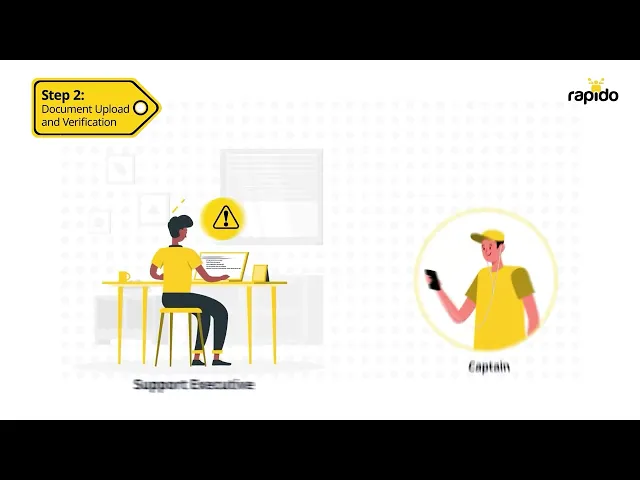
See how HSF helped Rapido streamline internal L&D communication and accelerate workforce training adoption. Watch the video:
The Structured Workflow Behind Corporate Online Course Module Creation
Operational clarity is essential when training becomes a strategic investment. According to Training Magazine, U.S. companies spent $101.8 billion on training in 2023, demonstrating the scale and financial significance of corporate learning initiatives. With budgets of this magnitude, organizations require structured production workflows to ensure learning assets deliver measurable business value rather than one-time content.
Step 1: Learning Objective Definition
Every module begins by identifying the precise skill gap. Clear, measurable outcomes are defined and directly aligned with business KPIs to ensure training supports performance improvement rather than content consumption.
Step 2: Instructional Scripting & Storyboarding
Subject matter experts are interviewed to extract knowledge. Visual learning flows are mapped, and content is segmented into micro-modules for focused delivery and retention.
Step 3: Professional Video Production
Filming may occur in studio or on-site environments. Screen capture supports software training, while animation simplifies complex or conceptual topics.
Step 4: Post-Production for Learning Retention
Motion graphics, reinforced on-screen text, and branded design consistency enhance engagement. Captioning and ADA compliance ensure accessibility standards are met.
Step 5: LMS Integration & Packaging
Final modules are exported in SCORM format or configured for xAPI. Assessments are embedded, and analytics compatibility enables completion tracking and performance measurement.
Types of Corporate Online Course Modules USA Companies Are Investing In
Organizations across the United States are prioritizing structured employee skill development videos to address evolving workforce demands. These modules are designed to close skill gaps, improve operational efficiency, and align workforce capabilities with strategic goals.
AI & Automation Training Modules: Focused on equipping employees with practical knowledge of AI tools, automation workflows, and data-driven decision-making to remain competitive in digitally transforming industries.
Leadership Development Programs: Structured video modules that strengthen managerial capabilities, decision-making skills, performance management practices, and cross-functional leadership effectiveness.
Compliance & Risk Management Courses: Standardized training designed to ensure regulatory adherence, reduce organizational risk, and maintain audit-ready documentation across departments.
Sales & Product Training: Modules that align teams on product knowledge, messaging consistency, objection handling, and sales methodologies to improve revenue performance.
Customer Experience & Soft Skills Modules: Training focused on communication, conflict resolution, service standards, and emotional intelligence to enhance client satisfaction and retention.
Software & Tool Adoption Training: Step-by-step instructional modules that accelerate technology implementation and ensure employees use enterprise tools effectively and consistently.
Cost & Timeline Expectations for Online Course Module Video Creation in the USA
Budget clarity is essential when planning a scalable learning infrastructure. Structured corporate training video production typically follows defined cost tiers based on module volume, production depth, and LMS integration requirements.
Project Scope | Typical Timeline | Budget Range (USD) |
Single Micro Module | 3–5 weeks | $4,000 – $8,000 |
5–10 Module Series | 6–10 weeks | $15,000 – $40,000 |
Enterprise Curriculum | Phased rollout | Custom |
Smaller modules require limited scripting and editing, while multi-module programs involve curriculum structuring and review cycles. Enterprise rollouts are often phased to maintain quality and alignment.
Costs vary depending on:
Animation depth and motion design
Number of filming days
SME interview and revision cycles
Localization and subtitling needs
Interactivity and LMS configuration level
Read more: How to Build a Scalable Corporate Video Training Program
Why Corporate Learning Leaders Choose Specialized Video Production Partners
Corporate learning leaders recognize that scalable upskilling requires more than internal coordination and basic recording tools. Most in-house teams lack dedicated production expertise, structured instructional design processes, and the technical precision required for LMS-ready deployment. As a result, training content often suffers from inconsistent quality, unclear learning objectives, and avoidable technical errors during SCORM or xAPI integration. In contrast, professional course video production combines instructional strategy, high-quality visual execution, and compliant packaging to ensure modules are engaging, measurable, and enterprise-ready. Partnering with specialists reduces operational risk, improves learning outcomes, and transforms training from an improvised initiative into a structured organizational infrastructure.
How House Sparrow Films Delivers Structured Corporate Online Course Modules
At House Sparrow Films, corporate online course modules are built through a defined production framework designed specifically for enterprise upskilling. The process begins with learning objective mapping and SME-driven scripting, followed by professional filming and retention-focused post-production. Every module is structured to ensure clarity, engagement, and measurable workforce impact rather than simple content capture.
The team also manages LMS-ready packaging, including SCORM and xAPI configuration, accessibility compliance, and analytics compatibility. This ensures modules are scalable across distributed teams, technically reliable, and aligned with USA corporate training standards.
Conclusion
The USA companies can no longer depend on outdated, instructor-led delivery models that fail to scale across hybrid and distributed teams. Modern workforce transformation demands structured, repeatable systems that drive measurable performance outcomes. Video-based online modules offer scalability, consistency, and analytics-driven visibility, but their effectiveness depends entirely on how they are designed and produced. Strategic execution in online training video production USA ensures learning objectives align with business KPIs and long-term skill development goals. The right production partner transforms training from isolated sessions into sustainable upskilling infrastructure. Connect with us at House Sparrow Films to build scalable corporate learning solutions.
FAQs
1. How long does it take to produce a corporate online course module?
A single micro-module typically takes 3–5 weeks, while multi-module programs may require 6–10 weeks depending on scripting depth, filming requirements, and LMS integration complexity.
2. What is the difference between a webinar recording and a structured course module?
Webinars are one-time events, while course modules are instructionally designed, professionally produced, and packaged for LMS tracking and measurable learning outcomes.
3. How are online course modules integrated into an LMS?
Modules are exported in formats like SCORM or xAPI, enabling completion tracking, assessment reporting, and analytics compatibility within corporate learning systems.
4. What factors influence the cost of corporate course video production?
Costs vary based on animation complexity, number of filming days, SME involvement, localization needs, and level of interactivity required.
5. Can online course video modules improve employee retention and performance?
Yes. Structured, micro-modular content with embedded assessments improves knowledge retention, accelerates onboarding, and supports measurable skill development.
Key takeaways
Scalable video modules train distributed teams efficiently and consistently.
Structured instructional design improves engagement, retention, and measurable skill adoption.
Standardized video training strengthens compliance accuracy across growing organizations.
LMS-ready modules enable tracking, assessment, and clear performance-based ROI.
Reusable course content reduces long-term training costs and dependency.
The pace of workforce transformation in the United States continues to intensify as AI, automation, and regulatory shifts redefine job roles across industries. According to D2L, 39 percent of core workforce skills are expected to change by 2030, highlighting the urgent need for structured reskilling initiatives. While corporate learning budgets remain strong, traditional instructor-led training models are struggling to keep up with hybrid teams and rapidly evolving competency requirements.
Inconsistent in-person sessions cannot scale efficiently across distributed workforces. This is why online training video production USA has become a strategic priority. Professionally developed video modules deliver consistent messaging, measurable learning outcomes through LMS integration, and repeatable training frameworks that support long-term corporate upskilling goals.
Read more: How to Use Corporate Training Videos to Build Cross-Functional Skills
Why Online Course Module Video Creation Is the Most Scalable Upskilling Model in the USA
The USA enterprises require training systems that scale without multiplying delivery costs or operational inefficiencies. Traditional classroom-based learning depends on repeated trainer hours, scheduling coordination, and location constraints. In contrast, structured upskilling programs video content converts training into a reusable digital asset that can be deployed across departments, regions, and time zones with consistency. This makes online course module video creation not just a content format, but a strategic workforce infrastructure.
Scalability Across Distributed Teams
Online modules allow organizations to train growing and geographically dispersed workforces without multiplying cost or complexity.
Single Production Investment: One professionally produced module can serve thousands of employees across departments and regions.
Reduced Delivery Costs: Eliminates repeated trainer fees, travel expenses, and ongoing scheduling coordination challenges.
Hybrid Workforce Support: Enables seamless access for remote, hybrid, and office-based teams simultaneously.
Standardization & Compliance
Online course module video creation ensures the same approved message is delivered every time, eliminating inconsistencies that often occur in live training sessions. This standardization protects organizational credibility and ensures that critical policies, procedures, and regulatory updates are communicated accurately across all teams.
For compliance-heavy industries such as finance, healthcare, and technology, consistency is not optional. Structured video modules reduce regulatory risk, support audit documentation, and provide verifiable proof that employees received and completed required training.
Retention & Learning Effectiveness
Well-structured modules combine visual, audio, and structured sequencing to improve recall. Micro-format lessons support focused learning and ongoing reinforcement.
Visual and audio reinforcement improves retention
Micro-modular design enhances recall
Enables refresher and reinforcement cycles
Measurable ROI
Unlike one-time workshops, online modules integrate directly with LMS platforms, allowing measurable outcomes tied to business metrics.
Completion tracking and learner analytics
Assessment-based knowledge verification
Skill benchmarking aligned with performance KPIs
Read more: Best Online Platforms for Hosting Training Videos
What “Online Course Module Video Creation” Actually Means in a Corporate Context
Many companies assume that recording a live session automatically creates a training asset. In reality, corporate eLearning videos are structured instructional products built for measurable workforce development. Online course module video creation is not a simple recording exercise; it is a planned learning strategy that aligns business objectives, instructional design, professional production, and LMS integration into one scalable framework.
This process is not a webinar recording captured for replay. It is not a Zoom archive stored for reference. It is not a talking-head presentation with minimal visual support, and it is not basic slide narration layered with voiceover. Those formats lack sequencing, measurable outcomes, and retention-focused design.
Instead, online course module creation involves structured curriculum mapping tied to competency goals. Each module is built through objective-based scripting, professionally filmed or animated for clarity and engagement, refined in post-production with reinforcement graphics and pacing strategy, and finally packaged in SCORM or xAPI format for LMS tracking and analytics.
Webinar Recording | Professional Course Module Video |
One-time event | Repeatable structured learning |
Unscripted | Instructionally designed |
Low retention | Designed for engagement |
Not measurable | LMS trackable |
Organizations seeking scalable, measurable upskilling require specialist execution rather than improvised content capture.
Get a quote with House Sparrow Films to transform your training into a structured, trackable learning infrastructure.
The Strategic Impact of Professionally Produced Video Modules on Corporate Upskilling
Professionally produced learning modules move training from an operational activity to a strategic business driver. When structured correctly, video-based programs influence onboarding speed, cost efficiency, knowledge retention, and even internal culture. As Josh Bersin, Global Industry Analyst and Founder of The Josh Bersin Company, states, “Organizations that treat learning as infrastructure, not an event, consistently outperform in talent development and agility.” That distinction is where structured video modules create measurable enterprise value.
Faster Time-to-Competency
Video modules compress learning cycles by delivering standardized instruction on demand. New hires can access structured content immediately, reducing ramp-up time and minimizing dependency on live trainers. Product training remains consistent across regions, and sales enablement modules ensure every representative receives identical messaging, shortening onboarding and accelerating productivity.
Reduced Training Cost Over Time
Upfront production investment creates long-term operational savings by reducing repetitive delivery expenses and dependency on trainers.
Lower Trainer Dependency: Fewer recurring facilitator fees and limited instructor hours required.
Eliminated Travel Costs: Removes location-based training logistics and related travel expenditures.
Reusable Learning Assets: Modules can be updated and redeployed without rebuilding programs.
Knowledge Retention & Reinforcement
Retention improves when learning is structured into digestible, sequenced modules that support repetition and validation.
Micro-Module Structure: Short, focused segments improve attention and long-term recall.
Chapter-Based Learning: Logical sequencing reinforces comprehension step by step.
Embedded Assessments: Quizzes validate understanding and support measurable competency tracking.
Employer Brand & Internal Culture
High-quality training signals commitment to employee development. Polished, professionally produced modules strengthen internal credibility, demonstrating that leadership invests in structured growth rather than temporary training fixes. Over time, this enhances employer brand perception and builds a culture of continuous learning.
See how HSF helped Rapido streamline internal L&D communication and accelerate workforce training adoption. Watch the video:
The Structured Workflow Behind Corporate Online Course Module Creation
Operational clarity is essential when training becomes a strategic investment. According to Training Magazine, U.S. companies spent $101.8 billion on training in 2023, demonstrating the scale and financial significance of corporate learning initiatives. With budgets of this magnitude, organizations require structured production workflows to ensure learning assets deliver measurable business value rather than one-time content.
Step 1: Learning Objective Definition
Every module begins by identifying the precise skill gap. Clear, measurable outcomes are defined and directly aligned with business KPIs to ensure training supports performance improvement rather than content consumption.
Step 2: Instructional Scripting & Storyboarding
Subject matter experts are interviewed to extract knowledge. Visual learning flows are mapped, and content is segmented into micro-modules for focused delivery and retention.
Step 3: Professional Video Production
Filming may occur in studio or on-site environments. Screen capture supports software training, while animation simplifies complex or conceptual topics.
Step 4: Post-Production for Learning Retention
Motion graphics, reinforced on-screen text, and branded design consistency enhance engagement. Captioning and ADA compliance ensure accessibility standards are met.
Step 5: LMS Integration & Packaging
Final modules are exported in SCORM format or configured for xAPI. Assessments are embedded, and analytics compatibility enables completion tracking and performance measurement.
Types of Corporate Online Course Modules USA Companies Are Investing In
Organizations across the United States are prioritizing structured employee skill development videos to address evolving workforce demands. These modules are designed to close skill gaps, improve operational efficiency, and align workforce capabilities with strategic goals.
AI & Automation Training Modules: Focused on equipping employees with practical knowledge of AI tools, automation workflows, and data-driven decision-making to remain competitive in digitally transforming industries.
Leadership Development Programs: Structured video modules that strengthen managerial capabilities, decision-making skills, performance management practices, and cross-functional leadership effectiveness.
Compliance & Risk Management Courses: Standardized training designed to ensure regulatory adherence, reduce organizational risk, and maintain audit-ready documentation across departments.
Sales & Product Training: Modules that align teams on product knowledge, messaging consistency, objection handling, and sales methodologies to improve revenue performance.
Customer Experience & Soft Skills Modules: Training focused on communication, conflict resolution, service standards, and emotional intelligence to enhance client satisfaction and retention.
Software & Tool Adoption Training: Step-by-step instructional modules that accelerate technology implementation and ensure employees use enterprise tools effectively and consistently.
Cost & Timeline Expectations for Online Course Module Video Creation in the USA
Budget clarity is essential when planning a scalable learning infrastructure. Structured corporate training video production typically follows defined cost tiers based on module volume, production depth, and LMS integration requirements.
Project Scope | Typical Timeline | Budget Range (USD) |
Single Micro Module | 3–5 weeks | $4,000 – $8,000 |
5–10 Module Series | 6–10 weeks | $15,000 – $40,000 |
Enterprise Curriculum | Phased rollout | Custom |
Smaller modules require limited scripting and editing, while multi-module programs involve curriculum structuring and review cycles. Enterprise rollouts are often phased to maintain quality and alignment.
Costs vary depending on:
Animation depth and motion design
Number of filming days
SME interview and revision cycles
Localization and subtitling needs
Interactivity and LMS configuration level
Read more: How to Build a Scalable Corporate Video Training Program
Why Corporate Learning Leaders Choose Specialized Video Production Partners
Corporate learning leaders recognize that scalable upskilling requires more than internal coordination and basic recording tools. Most in-house teams lack dedicated production expertise, structured instructional design processes, and the technical precision required for LMS-ready deployment. As a result, training content often suffers from inconsistent quality, unclear learning objectives, and avoidable technical errors during SCORM or xAPI integration. In contrast, professional course video production combines instructional strategy, high-quality visual execution, and compliant packaging to ensure modules are engaging, measurable, and enterprise-ready. Partnering with specialists reduces operational risk, improves learning outcomes, and transforms training from an improvised initiative into a structured organizational infrastructure.
How House Sparrow Films Delivers Structured Corporate Online Course Modules
At House Sparrow Films, corporate online course modules are built through a defined production framework designed specifically for enterprise upskilling. The process begins with learning objective mapping and SME-driven scripting, followed by professional filming and retention-focused post-production. Every module is structured to ensure clarity, engagement, and measurable workforce impact rather than simple content capture.
The team also manages LMS-ready packaging, including SCORM and xAPI configuration, accessibility compliance, and analytics compatibility. This ensures modules are scalable across distributed teams, technically reliable, and aligned with USA corporate training standards.
Conclusion
The USA companies can no longer depend on outdated, instructor-led delivery models that fail to scale across hybrid and distributed teams. Modern workforce transformation demands structured, repeatable systems that drive measurable performance outcomes. Video-based online modules offer scalability, consistency, and analytics-driven visibility, but their effectiveness depends entirely on how they are designed and produced. Strategic execution in online training video production USA ensures learning objectives align with business KPIs and long-term skill development goals. The right production partner transforms training from isolated sessions into sustainable upskilling infrastructure. Connect with us at House Sparrow Films to build scalable corporate learning solutions.
FAQs
1. How long does it take to produce a corporate online course module?
A single micro-module typically takes 3–5 weeks, while multi-module programs may require 6–10 weeks depending on scripting depth, filming requirements, and LMS integration complexity.
2. What is the difference between a webinar recording and a structured course module?
Webinars are one-time events, while course modules are instructionally designed, professionally produced, and packaged for LMS tracking and measurable learning outcomes.
3. How are online course modules integrated into an LMS?
Modules are exported in formats like SCORM or xAPI, enabling completion tracking, assessment reporting, and analytics compatibility within corporate learning systems.
4. What factors influence the cost of corporate course video production?
Costs vary based on animation complexity, number of filming days, SME involvement, localization needs, and level of interactivity required.
5. Can online course video modules improve employee retention and performance?
Yes. Structured, micro-modular content with embedded assessments improves knowledge retention, accelerates onboarding, and supports measurable skill development.