Key takeaways
Training videos help large West Coast organizations deliver consistent learning across distributed and hybrid teams.
Scalable video formats make it easier to adapt training as tools, products, and policies change.
The right platforms ensure training content is accessible, trackable, and easy to manage.
Governance and accessibility protect compliance and long-term training quality.
A strong video partner supports enterprise growth with clear, scalable training solutions.
Enterprise growth on the US West Coast means remote teams, fast product cycles, constant tool changes, and strict compliance demands. Enterprise training video solutions on the US West Coast help companies keep teams aligned, reduce onboarding delays, and build consistent learning experiences across locations. Video training is no longer optional for large employers. According to the LinkedIn Workplace Learning Report 2025, 71% of organizations offer leadership training, and video is one of the fastest ways to scale those programs across hybrid and distributed teams.
This blog will walk you through the key formats and platforms that power effective training videos, smart production approaches that work at scale, governance and update workflows that save time, proven rollout strategies, and how to choose the right video partner for your enterprise needs.
Why West Coast Enterprises Are Scaling Training Video Faster in 2026?
West Coast enterprises operate in fast-changing environments where skills evolve more quickly than teams can document them. New tools, AI-driven workflows, and tighter compliance requirements make static training outdated almost immediately. Video training solves this challenge by enabling faster updates, clear version control, and role-based learning paths. Working with an animated video company also helps enterprises explain complex processes visually, making training easier to adapt and scale as roles and technologies change.
Leadership enablement and operational consistency are now business-critical. Research shows that video-based learning improves knowledge retention by up to 83%, making it more effective than traditional formats. Video supports leadership development through realistic scenarios, coaching clips, and manager toolkits. It also ensures consistent onboarding, safety refreshers, tool rollouts, and SOP updates across hybrid, multi-site operations.
What “Enterprise Training Video Solutions” Actually Means?
Enterprise training video solutions go beyond one-off videos. They combine corporate training video production with structured planning, scalable delivery, and long-term management. For large organizations, this means building training content that supports business goals, adapts to change, and stays consistent across teams, locations, and roles. The focus is not just on visuals, but on clarity, governance, and measurable outcomes that align learning with operations.
Strategy: learning goals, audience mapping, content governance
Production: live-action, animation, screencasts, scenario-based formats
Delivery: LMS and LXP integration, user permissions, performance analytics
Operations: localization, accessibility standards, update cycles, approvals
Common Enterprise Use Cases
Enterprise training videos support a wide range of business-critical learning needs across large organizations. When designed correctly, they create consistency, reduce training time, and improve knowledge retention across teams and locations. These are the most common enterprise use cases for training video content.
Onboarding videos: Introduce new hires to company culture, role expectations, tools, and workflows while reducing ramp-up time and ensuring a consistent onboarding experience across departments and locations.
Compliance training videos: Deliver standardized guidance on regulations, policies, and workplace requirements, helping enterprises maintain compliance while ensuring employees clearly understand expectations and responsibilities.
Software and process tutorials: Provide step-by-step walkthroughs for internal systems, tools, and workflows, making it easier for employees to adopt new technologies and follow updated operational processes.
Sales and customer enablement: Equip sales and support teams with product knowledge, messaging frameworks, and use cases that improve confidence, consistency, and performance across customer interactions.
Leadership training: Support managers and leaders with scenario-based learning, coaching modules, and decision-making guidance that strengthen leadership skills across hybrid and distributed teams.
Security and safety training: Reinforce safe practices, risk awareness, and emergency procedures through visual demonstrations that reduce incidents and improve compliance across multiple work environments.
If you’re planning structured training that needs to scale across teams and regions, get a quote with House Sparrow Films to design enterprise-ready training videos built for long-term use and measurable impact.
The West Coast Stack: LMS and LXP Platforms That Shape Training Video Delivery
Choosing the right LMS or LXP platform directly impacts how enterprise training videos are delivered, tracked, and maintained. While platforms handle hosting and distribution, professional video production services are often required to ensure training content is clear, engaging, and built for scale. The table below shows how common West Coast platforms support training video delivery and where custom production adds the most value.
Platform / Category | Best fit (enterprise need) | Video strengths | When you still need custom production |
Panopto | Secure internal knowledge sharing and enterprise-wide training libraries | Advanced video search, access controls, analytics, and secure hosting | When training requires clear storytelling, structured scripts, and polished visuals |
Skilljar | Customer and partner training through external learning academies | Scalable delivery, branded learning portals, progress tracking | When product onboarding or certification content needs higher engagement and clarity |
Moodle Workplace | Structured internal training programs for large, distributed teams | Flexible course management, role-based access, and detailed reporting | When enterprise programs require consistent quality and professional production standards |
Quick Decision Guide
This quick guide helps enterprises decide when platform tools are enough and when professionally produced training videos create a greater impact.
Rely on platform templates for internal updates, quick documentation, and low-complexity learning needs.
Invest in higher-quality video production services for onboarding, leadership, compliance, and customer-facing training.
Use custom video series to explain complex workflows, tools, and operational decisions clearly.
Prioritize platforms with strong search capabilities for large training libraries.
Define roles and permissions early to protect sensitive content and support compliance.
Combine platform delivery with modular video design to simplify updates and version control.
Read more: Leadership Training Videos for US Corporations
Specialized West Coast Training Needs: Industry-Driven Formats
West Coast enterprises operate across highly regulated, fast-moving industries where training accuracy and consistency directly impact performance and compliance. Effective business video services help organizations tailor learning formats to industry risks, operational complexity, and workforce distribution while maintaining clarity at scale.
Tech and SaaS (Bay Area, Seattle, San Diego)
Technology and SaaS companies require training that keeps pace with frequent releases, security updates, and evolving sales motions. Video supports faster adoption while reducing dependency on live sessions.
Product enablement and feature rollouts
Internal tool adoption and security basics
Sales playbooks and customer workflows
Formats: screencasts, UI overlays, microlearning modules
Healthcare and Med-Tech (High-Risk Training)
Healthcare and med-tech organizations operate in environments where accuracy and documentation are critical. Training videos must support procedural clarity, reduce human error, and withstand audits and regulatory review. Video allows teams to standardize instruction while maintaining precision across locations and specialties.
High-quality training videos also enable consistent knowledge transfer for complex procedures. Expert-led modules and simulation visuals help teams practice safely, reinforce protocols, and support ongoing certification and compliance requirements.
Manufacturing, logistics, and Field Ops
Operational teams need training that reflects real-world environments and reinforces safe, repeatable processes. Video helps standardize instruction while reducing on-site training time.
SOPs and operational workflows
Safety protocols and incident prevention
Equipment handling and maintenance
Formats: scenario-based safety, real-site filming, checklist videos
Production Approach That Works for Enterprises: Process, Governance, Scale
Enterprise training videos succeed when production follows a clear, repeatable process designed for scale, compliance, and long-term use. A structured approach reduces rework, protects brand and regulatory standards, and ensures training content delivers consistent results across teams, locations, and learning platforms.
Pre-Production that Prevents Rework
Pre-production sets the foundation for enterprise training video success. Clear planning at this stage reduces revisions, aligns stakeholders, and protects timelines when projects scale across teams, regions, and compliance requirements.
Core planning steps:
Define outcomes per role
Conduct SME interviews
Secure script and storyboard approvals
Establish visual rules for brand and compliance
Production Formats that Scale
Choosing the right production formats ensures training videos remain flexible, reusable, and easy to update as enterprise needs evolve.
Scalable video formats:
Live-action training
Animated explainers for systems and process logic
Screencast tutorials for software workflows
Hybrid formats combining live footage with motion graphics overlays
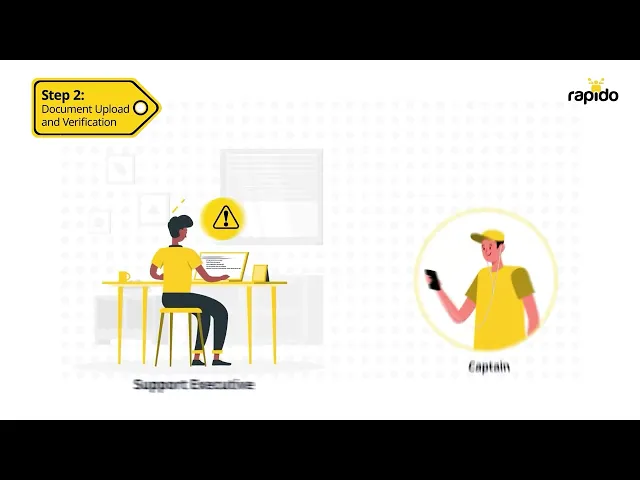
See how HSF helped Rapido deliver a scalable L&D training video that supports consistent learning across teams and roles. Watch the video:
Accessibility, Localization, and Content Control for Enterprise Training
Enterprise training videos must support diverse audiences, multiple regions, and frequent updates without adding operational friction. A practical approach keeps training usable, inclusive, and easy to maintain at scale.
Accessibility Checklist
Here are the core accessibility elements enterprises should address to ensure training videos work for all learners.
Clear, accurate captions for spoken content
Consistent audio clarity without distracting background noise
Readable on-screen text with proper contrast and pacing
Screen-reader-friendly support documents and references
Simple language that avoids unnecessary jargon
Localization Workflow
A structured localization process ensures training remains relevant and accurate across regions while reducing rework.
Translation-ready scripts created during pre-production
Region-specific examples aligned with local workflows
Centralized terminology to maintain consistency across languages
Planned voiceover and subtitle strategies for scale
Regional review checkpoints before final rollout
Versioning and Updates
Enterprise training content must evolve alongside tools, policies, and workflows. Without a clear versioning strategy, videos quickly become outdated and confusing for learners.
Modular video design allows individual sections to be updated without reworking entire programs. Defined review cycles, typically quarterly, help teams audit accuracy, retire outdated content, and maintain clear version control across platforms and regions.
Measuring Training Impact that Leaders Can Rely On
Enterprise training videos must connect learning activity to real business outcomes, not surface-level engagement. Reliable measurement focuses on how training changes behavior, reduces friction, and improves performance across teams and roles.
Effective tracking starts with learner behavior and operational signals. Key metrics include completion and drop-off points, results from knowledge checks, and time-to-competency after onboarding or role changes. Enterprises also monitor fewer repeat support tickets, reduced operational errors, and manager observation signals that show improved confidence, consistency, and execution on the job.
A simple ROI structure helps leadership evaluate training investments clearly. Compare total production and rollout costs against measurable benefits such as reduced trainer hours, fewer safety or compliance incidents, and faster onboarding timelines. When training videos are designed with clarity and scale in mind, they consistently deliver efficiency gains that extend well beyond initial deployment.
Read more: How to Maintain Consistency Across Global Corporate Training Videos
How to Choose the Right Enterprise Training Video Partner for West Coast Teams
Selecting the right training video partner is a strategic decision that affects learning quality, compliance, and long-term scalability. West Coast enterprises should look beyond visual polish and evaluate whether a partner understands enterprise processes, governance needs, and measurable learning outcomes.
Evaluation checklist:
Proven process maturity for SME collaboration, reviews, and approvals
Secure content handling and clear data protection practices
Ability to scale training video series, not just one-off projects
Strong scriptwriting and instructional clarity tailored to enterprise roles
Readiness to meet accessibility standards from day one
Reliable timelines that align with enterprise rollout schedules
Red flags to watch for:
No clear ownership of scripts or instructional structure
Lack of a modular plan for future updates and revisions
Overproduced videos that look good but fail to teach effectively
Training content that cannot support analytics or performance tracking
No defined review or approval workflow for compliance needs
Read more: How to Build a Scalable Corporate Video Training Program
Why House Sparrow Films is a Fit for West Coast Enterprise Training
House Sparrow Films works with West Coast enterprises through a remote-first production workflow built for global teams. The focus stays on training effectiveness, not ad-style visuals. Every project is designed to support scale, consistency, and long-term use across large training libraries, with a flexible mix of live-action, animation, screencast, and hybrid formats.
What you get is a structured training system, not just videos. This includes a clear script and storyboard process, brand-safe templates for series, modular lesson design for easy updates, LMS-ready exports with thumbnails, and captions built with accessibility in mind.
Conclusion
Enterprise training video solutions on the US West Coast succeed when platforms, production quality, governance, and measurement work together. The right LMS or LXP supports delivery, strong production ensures clarity, governance protects compliance, and meaningful metrics tie training to real business outcomes. When these elements align, training videos become a reliable system for knowledge transfer, not just a content library.
A practical next step is to select one training track, pilot it with a focused audience, measure results, and scale based on performance. If your enterprise is ready to move forward, reach out to House Sparrow Films to discuss a structured training video approach built for long-term impact.
FAQs
How long should enterprise training videos be?
Most enterprise training videos perform best between three and eight minutes, depending on complexity, with longer topics broken into modular lessons for easier updates and better retention.Which training video format works best for large teams?
A mix of live-action, animation, and screencasts works best, allowing enterprises to match formats to content type, learning goals, and update frequency.How do enterprises keep training videos updated?
Modular design, clear version control, and scheduled review cycles make it easier to update specific sections without reworking entire training programs.Can training videos integrate with existing LMS platforms?
Yes, enterprise training videos can be exported in LMS-ready formats with tracking, permissions, and analytics that integrate smoothly into most LMS and LXP platforms.How is ROI measured for enterprise training videos?
ROI is measured by comparing production costs against benefits such as reduced training hours, faster onboarding, fewer errors, and improved performance observed by managers.
Key takeaways
Training videos help large West Coast organizations deliver consistent learning across distributed and hybrid teams.
Scalable video formats make it easier to adapt training as tools, products, and policies change.
The right platforms ensure training content is accessible, trackable, and easy to manage.
Governance and accessibility protect compliance and long-term training quality.
A strong video partner supports enterprise growth with clear, scalable training solutions.
Enterprise growth on the US West Coast means remote teams, fast product cycles, constant tool changes, and strict compliance demands. Enterprise training video solutions on the US West Coast help companies keep teams aligned, reduce onboarding delays, and build consistent learning experiences across locations. Video training is no longer optional for large employers. According to the LinkedIn Workplace Learning Report 2025, 71% of organizations offer leadership training, and video is one of the fastest ways to scale those programs across hybrid and distributed teams.
This blog will walk you through the key formats and platforms that power effective training videos, smart production approaches that work at scale, governance and update workflows that save time, proven rollout strategies, and how to choose the right video partner for your enterprise needs.
Why West Coast Enterprises Are Scaling Training Video Faster in 2026?
West Coast enterprises operate in fast-changing environments where skills evolve more quickly than teams can document them. New tools, AI-driven workflows, and tighter compliance requirements make static training outdated almost immediately. Video training solves this challenge by enabling faster updates, clear version control, and role-based learning paths. Working with an animated video company also helps enterprises explain complex processes visually, making training easier to adapt and scale as roles and technologies change.
Leadership enablement and operational consistency are now business-critical. Research shows that video-based learning improves knowledge retention by up to 83%, making it more effective than traditional formats. Video supports leadership development through realistic scenarios, coaching clips, and manager toolkits. It also ensures consistent onboarding, safety refreshers, tool rollouts, and SOP updates across hybrid, multi-site operations.
What “Enterprise Training Video Solutions” Actually Means?
Enterprise training video solutions go beyond one-off videos. They combine corporate training video production with structured planning, scalable delivery, and long-term management. For large organizations, this means building training content that supports business goals, adapts to change, and stays consistent across teams, locations, and roles. The focus is not just on visuals, but on clarity, governance, and measurable outcomes that align learning with operations.
Strategy: learning goals, audience mapping, content governance
Production: live-action, animation, screencasts, scenario-based formats
Delivery: LMS and LXP integration, user permissions, performance analytics
Operations: localization, accessibility standards, update cycles, approvals
Common Enterprise Use Cases
Enterprise training videos support a wide range of business-critical learning needs across large organizations. When designed correctly, they create consistency, reduce training time, and improve knowledge retention across teams and locations. These are the most common enterprise use cases for training video content.
Onboarding videos: Introduce new hires to company culture, role expectations, tools, and workflows while reducing ramp-up time and ensuring a consistent onboarding experience across departments and locations.
Compliance training videos: Deliver standardized guidance on regulations, policies, and workplace requirements, helping enterprises maintain compliance while ensuring employees clearly understand expectations and responsibilities.
Software and process tutorials: Provide step-by-step walkthroughs for internal systems, tools, and workflows, making it easier for employees to adopt new technologies and follow updated operational processes.
Sales and customer enablement: Equip sales and support teams with product knowledge, messaging frameworks, and use cases that improve confidence, consistency, and performance across customer interactions.
Leadership training: Support managers and leaders with scenario-based learning, coaching modules, and decision-making guidance that strengthen leadership skills across hybrid and distributed teams.
Security and safety training: Reinforce safe practices, risk awareness, and emergency procedures through visual demonstrations that reduce incidents and improve compliance across multiple work environments.
If you’re planning structured training that needs to scale across teams and regions, get a quote with House Sparrow Films to design enterprise-ready training videos built for long-term use and measurable impact.
The West Coast Stack: LMS and LXP Platforms That Shape Training Video Delivery
Choosing the right LMS or LXP platform directly impacts how enterprise training videos are delivered, tracked, and maintained. While platforms handle hosting and distribution, professional video production services are often required to ensure training content is clear, engaging, and built for scale. The table below shows how common West Coast platforms support training video delivery and where custom production adds the most value.
Platform / Category | Best fit (enterprise need) | Video strengths | When you still need custom production |
Panopto | Secure internal knowledge sharing and enterprise-wide training libraries | Advanced video search, access controls, analytics, and secure hosting | When training requires clear storytelling, structured scripts, and polished visuals |
Skilljar | Customer and partner training through external learning academies | Scalable delivery, branded learning portals, progress tracking | When product onboarding or certification content needs higher engagement and clarity |
Moodle Workplace | Structured internal training programs for large, distributed teams | Flexible course management, role-based access, and detailed reporting | When enterprise programs require consistent quality and professional production standards |
Quick Decision Guide
This quick guide helps enterprises decide when platform tools are enough and when professionally produced training videos create a greater impact.
Rely on platform templates for internal updates, quick documentation, and low-complexity learning needs.
Invest in higher-quality video production services for onboarding, leadership, compliance, and customer-facing training.
Use custom video series to explain complex workflows, tools, and operational decisions clearly.
Prioritize platforms with strong search capabilities for large training libraries.
Define roles and permissions early to protect sensitive content and support compliance.
Combine platform delivery with modular video design to simplify updates and version control.
Read more: Leadership Training Videos for US Corporations
Specialized West Coast Training Needs: Industry-Driven Formats
West Coast enterprises operate across highly regulated, fast-moving industries where training accuracy and consistency directly impact performance and compliance. Effective business video services help organizations tailor learning formats to industry risks, operational complexity, and workforce distribution while maintaining clarity at scale.
Tech and SaaS (Bay Area, Seattle, San Diego)
Technology and SaaS companies require training that keeps pace with frequent releases, security updates, and evolving sales motions. Video supports faster adoption while reducing dependency on live sessions.
Product enablement and feature rollouts
Internal tool adoption and security basics
Sales playbooks and customer workflows
Formats: screencasts, UI overlays, microlearning modules
Healthcare and Med-Tech (High-Risk Training)
Healthcare and med-tech organizations operate in environments where accuracy and documentation are critical. Training videos must support procedural clarity, reduce human error, and withstand audits and regulatory review. Video allows teams to standardize instruction while maintaining precision across locations and specialties.
High-quality training videos also enable consistent knowledge transfer for complex procedures. Expert-led modules and simulation visuals help teams practice safely, reinforce protocols, and support ongoing certification and compliance requirements.
Manufacturing, logistics, and Field Ops
Operational teams need training that reflects real-world environments and reinforces safe, repeatable processes. Video helps standardize instruction while reducing on-site training time.
SOPs and operational workflows
Safety protocols and incident prevention
Equipment handling and maintenance
Formats: scenario-based safety, real-site filming, checklist videos
Production Approach That Works for Enterprises: Process, Governance, Scale
Enterprise training videos succeed when production follows a clear, repeatable process designed for scale, compliance, and long-term use. A structured approach reduces rework, protects brand and regulatory standards, and ensures training content delivers consistent results across teams, locations, and learning platforms.
Pre-Production that Prevents Rework
Pre-production sets the foundation for enterprise training video success. Clear planning at this stage reduces revisions, aligns stakeholders, and protects timelines when projects scale across teams, regions, and compliance requirements.
Core planning steps:
Define outcomes per role
Conduct SME interviews
Secure script and storyboard approvals
Establish visual rules for brand and compliance
Production Formats that Scale
Choosing the right production formats ensures training videos remain flexible, reusable, and easy to update as enterprise needs evolve.
Scalable video formats:
Live-action training
Animated explainers for systems and process logic
Screencast tutorials for software workflows
Hybrid formats combining live footage with motion graphics overlays
See how HSF helped Rapido deliver a scalable L&D training video that supports consistent learning across teams and roles. Watch the video:
Accessibility, Localization, and Content Control for Enterprise Training
Enterprise training videos must support diverse audiences, multiple regions, and frequent updates without adding operational friction. A practical approach keeps training usable, inclusive, and easy to maintain at scale.
Accessibility Checklist
Here are the core accessibility elements enterprises should address to ensure training videos work for all learners.
Clear, accurate captions for spoken content
Consistent audio clarity without distracting background noise
Readable on-screen text with proper contrast and pacing
Screen-reader-friendly support documents and references
Simple language that avoids unnecessary jargon
Localization Workflow
A structured localization process ensures training remains relevant and accurate across regions while reducing rework.
Translation-ready scripts created during pre-production
Region-specific examples aligned with local workflows
Centralized terminology to maintain consistency across languages
Planned voiceover and subtitle strategies for scale
Regional review checkpoints before final rollout
Versioning and Updates
Enterprise training content must evolve alongside tools, policies, and workflows. Without a clear versioning strategy, videos quickly become outdated and confusing for learners.
Modular video design allows individual sections to be updated without reworking entire programs. Defined review cycles, typically quarterly, help teams audit accuracy, retire outdated content, and maintain clear version control across platforms and regions.
Measuring Training Impact that Leaders Can Rely On
Enterprise training videos must connect learning activity to real business outcomes, not surface-level engagement. Reliable measurement focuses on how training changes behavior, reduces friction, and improves performance across teams and roles.
Effective tracking starts with learner behavior and operational signals. Key metrics include completion and drop-off points, results from knowledge checks, and time-to-competency after onboarding or role changes. Enterprises also monitor fewer repeat support tickets, reduced operational errors, and manager observation signals that show improved confidence, consistency, and execution on the job.
A simple ROI structure helps leadership evaluate training investments clearly. Compare total production and rollout costs against measurable benefits such as reduced trainer hours, fewer safety or compliance incidents, and faster onboarding timelines. When training videos are designed with clarity and scale in mind, they consistently deliver efficiency gains that extend well beyond initial deployment.
Read more: How to Maintain Consistency Across Global Corporate Training Videos
How to Choose the Right Enterprise Training Video Partner for West Coast Teams
Selecting the right training video partner is a strategic decision that affects learning quality, compliance, and long-term scalability. West Coast enterprises should look beyond visual polish and evaluate whether a partner understands enterprise processes, governance needs, and measurable learning outcomes.
Evaluation checklist:
Proven process maturity for SME collaboration, reviews, and approvals
Secure content handling and clear data protection practices
Ability to scale training video series, not just one-off projects
Strong scriptwriting and instructional clarity tailored to enterprise roles
Readiness to meet accessibility standards from day one
Reliable timelines that align with enterprise rollout schedules
Red flags to watch for:
No clear ownership of scripts or instructional structure
Lack of a modular plan for future updates and revisions
Overproduced videos that look good but fail to teach effectively
Training content that cannot support analytics or performance tracking
No defined review or approval workflow for compliance needs
Read more: How to Build a Scalable Corporate Video Training Program
Why House Sparrow Films is a Fit for West Coast Enterprise Training
House Sparrow Films works with West Coast enterprises through a remote-first production workflow built for global teams. The focus stays on training effectiveness, not ad-style visuals. Every project is designed to support scale, consistency, and long-term use across large training libraries, with a flexible mix of live-action, animation, screencast, and hybrid formats.
What you get is a structured training system, not just videos. This includes a clear script and storyboard process, brand-safe templates for series, modular lesson design for easy updates, LMS-ready exports with thumbnails, and captions built with accessibility in mind.
Conclusion
Enterprise training video solutions on the US West Coast succeed when platforms, production quality, governance, and measurement work together. The right LMS or LXP supports delivery, strong production ensures clarity, governance protects compliance, and meaningful metrics tie training to real business outcomes. When these elements align, training videos become a reliable system for knowledge transfer, not just a content library.
A practical next step is to select one training track, pilot it with a focused audience, measure results, and scale based on performance. If your enterprise is ready to move forward, reach out to House Sparrow Films to discuss a structured training video approach built for long-term impact.
FAQs
How long should enterprise training videos be?
Most enterprise training videos perform best between three and eight minutes, depending on complexity, with longer topics broken into modular lessons for easier updates and better retention.Which training video format works best for large teams?
A mix of live-action, animation, and screencasts works best, allowing enterprises to match formats to content type, learning goals, and update frequency.How do enterprises keep training videos updated?
Modular design, clear version control, and scheduled review cycles make it easier to update specific sections without reworking entire training programs.Can training videos integrate with existing LMS platforms?
Yes, enterprise training videos can be exported in LMS-ready formats with tracking, permissions, and analytics that integrate smoothly into most LMS and LXP platforms.How is ROI measured for enterprise training videos?
ROI is measured by comparing production costs against benefits such as reduced training hours, faster onboarding, fewer errors, and improved performance observed by managers.