Key Takeaways
Explainer videos make learning clearer, faster, and more engaging for students.
Visual instruction improves comprehension, especially for complex concepts.
Videos support different learning styles and help teachers save classroom time.
Schools can use explainer videos to simplify lessons, boost retention, and enhance collaboration.
Explainer content builds a more interactive and modern classroom environment.
Research shows that students’ attention spans in classroom settings are shrinking, while curriculum complexity and digital distractions continue to rise. For example, studies of educational-video usage highlight that learners are far more likely to stay engaged when video content is short, well-designed, and visually structured. Traditional teaching methods often struggle to address the wide variety of learning styles, stay fresh, and keep learners actively engaged. That is why classroom explainer videos are becoming a practical tool; they bridge the gap between traditional lecture formats and today’s visual-rich digital habits. These videos improve student engagement, enhance understanding, and help teachers deliver lessons more effectively. In this blog, we’ll explore how explainer videos can transform the school classroom, especially when combined with digital teaching tools and strategies for student engagement.
Why Classrooms Need More Visual Learning Tools Today
Modern classrooms face constant attention challenges as students juggle shorter focus spans, heavy screen exposure, and fast-paced digital habits. At the same time, curriculum complexity continues to grow, and teachers are expected to cover more concepts in less time. With digital learning becoming a daily norm, students also arrive with diverse learning styles, from visual and auditory preferences to learners who need slower, clearer breakdowns. These shifts make traditional lecture-only methods less effective than before. Schools now need simplified explanation formats that turn lessons into clear, visual steps. Visual learning tools fill this gap by making complex content easier to understand, retain, and apply in class.
How Explainer Videos Improve Understanding in School Classrooms
Explainer videos improve clarity by turning heavy lessons into simple visuals that students can follow easily. They support comprehension, reduce confusion, and help teachers explain complex ideas with more confidence.
Break Down Complex Concepts Into Simple Visual Steps: Visual sequences turn difficult topics into clear, step-by-step explanations that reduce cognitive load and help students understand each stage without feeling overwhelmed.
Use Motion Graphics to Explain Science, Math, and Abstract Ideas: Animated movements reveal processes, relationships, and patterns that are hard to visualize through text alone, making abstract ideas easier for students to grasp.
Strengthen Concept Clarity Through Real-World Examples: Relatable scenarios and everyday applications help students connect theory to practice, improving retention and making academic concepts more meaningful and easier to recall later.
Reinforce Classroom Learning With Repetition and Review: Students can pause, replay, and revisit key parts of a video, allowing slow learners and revision-focused learners to strengthen understanding at their own pace.
Make Lessons More Memorable Through Visual Storytelling: Story-driven videos use characters, scenes, and narrative flow to create an emotional connection, helping students remember lessons better than traditional text-heavy explanations.
Read more: How to Create Virtual Field Trip Videos for Classrooms
Benefits of Explainer Videos for Different Types of Learners
Explainer videos work well with digital teaching tools because they adapt to the varied ways students learn. Instead of relying on a single method, videos combine visuals, sound, movement, and accessibility features that support every learner in the classroom.
Visual Learners Understand Better With Graphics and Animation: Rich graphics, labels, and animations simplify abstract ideas, helping visual learners absorb information quickly and recall it more accurately during class activities.
Auditory Learners Benefit From Clear Narration: Well-paced narration explains concepts in a structured flow, supporting students who learn best through listening and giving them a clear guide to follow.
Kinesthetic Learners Engage Through Demonstration-Based Learning: Demonstrations, animated actions, and step-by-step movements simulate hands-on learning, helping kinesthetic learners understand processes they would otherwise need to physically perform.
English-Language Learners Gain Clarity Through Subtitles and Visuals: Subtitles, visual cues, and slowed explanations make lessons easier for ELL students, improving comprehension without overwhelming them with text-heavy material.
Students With Special Needs Receive Simplified, Accessible Instruction: Adjusted pacing, high-contrast visuals, narration support, and repeat viewing options create an inclusive environment where students with learning differences can learn comfortably and independently.
Why Explainer Videos Increase Student Engagement
Explainer videos strengthen student engagement because they use movement, colour, and pacing to keep learners focused. Dynamic visuals reduce boredom, cut distractions, and make lessons feel fresher than traditional text-heavy teaching. When students see concepts unfold on screen, their attention stays rooted in the lesson instead of drifting elsewhere.
They also encourage participation through interactive formats such as embedded quizzes, pause-and-reflect sections, and short prompt questions. These features increase curiosity and pull students into the learning process rather than leaving them as passive listeners. At the same time, teachers find it easier to capture attention quickly, creating a more energetic and responsive classroom environment.
Table Section: How Explainer Videos Enhance Classroom Outcomes
When schools adopt classroom explainer videos, they create a clearer, more structured learning environment where students understand lessons faster and teachers deliver content with greater consistency. This table breaks down how videos directly improve core classroom needs.
Classroom Need | Traditional Teaching Limitation | How Explainer Videos Help | Learning Impact |
Concept clarity | Explanations may be too fast, abstract, or difficult to visualize | Visual steps and animations simplify complex ideas | Better comprehension and fewer misunderstandings |
Engagement | Text-heavy instruction can feel monotonous and lose student interest | Dynamic visuals and storytelling hold attention | Higher focus and sustained participation |
Multi-learning styles | A single teaching method may not support all learners | Combines visuals, audio, subtitles, and demonstrations | More inclusive learning for varied student needs |
Revision & reinforcement | Students cannot replay lectures when confused or revising | Videos can be paused, replayed, and revisited anytime | Stronger retention and improved recall |
Complex subject understanding | Abstract topics remain unclear without visual support | Motion graphics show invisible processes and step-by-step logic | Deeper understanding of advanced or abstract concepts |
Classroom time efficiency | Teachers spend time repeating the same explanation across classes | Pre-recorded videos provide free time for activities and interaction | More productive lessons and improved use of classroom time |
Read more: Virtual Field Trip Videos for Schools and Universities
How Explainer Videos Support Teachers and Improve Lesson Delivery
Explainer videos give teachers practical support by reducing repetitive effort and creating a smoother teaching flow. Pre-recorded explanations save valuable time that is usually spent re-teaching the same concept across multiple sections. This also ensures consistent instruction, so every class receives the same clear explanation without variation. With the core teaching covered in the video, teachers can focus more on activities, discussions, and interaction that deepen understanding. On substitute teaching days, videos maintain lesson quality even when the regular teacher is absent. They also support flipped classroom models, where students learn the basics at home and use classroom time for practice, problem-solving, and higher-level thinking.
Read more: How to Use Video to Teach Life Skills to Students
Subjects That Benefit Most From Explainer Videos
Some subjects naturally become clearer when taught visually, making explainer videos a strong fit for daily classroom use. Topics that involve steps, processes, timelines, or abstract ideas gain the most clarity when supported with animation, narration, and structured visuals.
Science (Physics, Chemistry, Biology)
Explainer videos help students visualize experiments, reactions, forces, and biological mechanisms that are difficult to demonstrate live in class. Animations show microscopic processes, chemical interactions, and cause-and-effect sequences, making scientific ideas easier to follow and remember.
Mathematics
Math becomes more approachable when formulas, problem-solving steps, and geometric movements are animated. Videos guide students through each stage of a calculation, helping them understand not only the final answer but also the logic and reasoning behind it.
History and Social Studies
Timelines, historical events, cultural shifts, and global geography become more engaging through visual storytelling. Videos allow students to see maps, reenactments, and sequences of events unfold, making history feel more connected, memorable, and easier to understand.
English and Language Learning
Grammar rules, vocabulary usage, and reading comprehension strategies benefit from visual cues, narration, and contextual examples. Explainer videos help students understand sentence structure, word meaning, and reading techniques by showing how language works in real situations.
Computer Science and Coding
Logic structures, algorithms, loops, and debugging steps are easier to grasp when animated or demonstrated onscreen. Explainer videos show how code executes, how data moves, and how different components interact, helping students understand both concepts and workflow more clearly.
How Explainer Videos Improve Collaboration and Group Learning
Explainer videos create a shared understanding that helps students work together more confidently. When everyone begins with the same visual explanation, group activities become smoother and more engaging.
Encourage Team Activities After Watching Videos: Clear visual explanations give groups a common starting point, making it easier for students to collaborate, divide tasks, and apply what they learned in practical activities.
Build Discussion Starters for Classroom Debates: Videos introduce ideas in a structured way, helping teachers spark debates and prompting students to share opinions, compare viewpoints, and think more critically.
Support Peer-to-Peer Teaching: Students who grasp concepts quickly can explain them to classmates using the video as a reference, strengthening understanding for both the learner and the helper.
Help Create Project-Based Learning Assignments: Videos provide context and direction for project work, guiding students as they create presentations, models, or experiments that build on the concepts introduced visually.
How Schools Can Integrate Explainer Videos Into Daily Learning
Schools can use classroom explainer videos in simple, routine ways that boost clarity and save teaching time. Starting lessons with short video introductions helps students understand the day’s topic before the teacher expands on it. End-of-chapter summaries delivered through videos strengthen revision and give students a quick way to review key ideas.
These videos can also be uploaded to the school LMS or learning apps so students can revisit lessons at home. Video-based quizzes offer fast assessments that check understanding without adding extra workload for teachers. Schools can further improve consistency by sharing video libraries across grades, ensuring every student has access to the same high-quality learning resources.
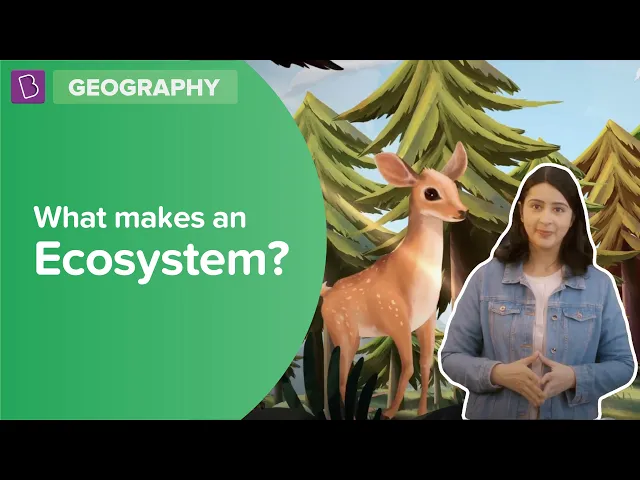
See how HSF helped Byjus turn a core science topic into a clear, visual classroom explainer that teachers reuse across grades, making ecosystems easier to understand and remember. Watch the video:
Mistakes Schools Should Avoid When Using Explainer Videos
Explainer videos work best when used carefully. A few common mistakes can weaken their impact, so schools should stay mindful of how videos fit into the overall lesson plan.
Overusing Videos Without Teacher Explanation: Relying only on videos can leave gaps. Students still need teacher guidance to connect ideas, ask questions, and apply the concept correctly.
Using Low-Quality or Incorrect Educational Content: Poor visuals, unclear narration, or factual errors confuse students. Only use verified, well-produced educational videos to maintain accuracy and trust.
Not Aligning Videos With Curriculum Standards: Videos must match grade-level goals. Misaligned content creates confusion and makes it harder for teachers to stay on track with required outcomes.
Ignoring Student Questions After the Video: Students often need clarification once the video ends. Skipping the discussion reduces understanding and limits meaningful learning.
Using Long Videos That Reduce Attention Span: Long videos cause students to lose focus. Short, concise clips maintain engagement and fit better within classroom timing.
How House Sparrow Films Helps Schools Create High-Quality Educational Explainer Videos
House Sparrow Films helps schools turn complex lessons into clear, engaging visuals that support real classroom learning. Every project begins with curriculum-aligned scriptwriting to ensure academic accuracy and smooth integration with lesson plans. Our team creates high-quality animations that simplify difficult concepts and make abstract ideas easier to understand. We also design age-appropriate storytelling so that the content fits each grade’s learning level. Professional voiceovers and accessible subtitles support diverse learners, including ELL and special-needs students. Schools can also build scalable video libraries across multiple subjects, giving teachers ready-to-use resources that strengthen clarity, consistency, and student participation every day.
Conclusion
Classroom explainer videos make learning more engaging, inclusive, and effective by turning complex lessons into clear, visual explanations that students can understand quickly. They support long-term learning by improving comprehension, boosting participation, and strengthening overall classroom performance. When used consistently, these videos help schools create learning environments where every student can keep up, revise easily, and stay motivated. Video-supported learning also modernizes teaching, giving educators practical tools that match today’s digital habits and diverse learning needs. House Sparrow Films can help schools build high-quality educational video libraries that deliver clarity, accuracy, and consistency across grades. Reach out to HSF to create stronger learning outcomes.
FAQs
1. Why are explainer videos effective for school students?
Explainer videos combine visuals, narration, and structured pacing, making complex ideas easier to understand. They reduce cognitive load, maintain attention, and help students learn faster, especially when paired with teacher guidance and interactive classroom activities.
2. Which subjects benefit most from explainer videos?
Science, math, history, language learning, and computer science benefit greatly because these subjects involve steps, processes, timelines, or abstract ideas. Visual explanations make these topics clearer, easier to follow, and far more engaging for students across different grade levels.
3. How long should a classroom explainer video be?
The ideal length is typically under six minutes. Short, focused videos maintain attention, prevent information overload, and allow teachers to fit them easily into lessons while keeping students engaged throughout the explanation.
4. Can explainer videos replace teachers?
No. Explainer videos support teachers by simplifying explanations, but they cannot replace real interaction. Teachers guide discussion, answer questions, provide context, and help students apply knowledge, making both roles essential for effective classroom learning.
5. Are explainer videos useful for homework and revision?
Yes. Students can replay videos at their own pace, review difficult sections, and reinforce understanding before tests. This flexibility makes videos a strong tool for homework, self-paced practice, and after-class revision.
Key Takeaways
Explainer videos make learning clearer, faster, and more engaging for students.
Visual instruction improves comprehension, especially for complex concepts.
Videos support different learning styles and help teachers save classroom time.
Schools can use explainer videos to simplify lessons, boost retention, and enhance collaboration.
Explainer content builds a more interactive and modern classroom environment.
Research shows that students’ attention spans in classroom settings are shrinking, while curriculum complexity and digital distractions continue to rise. For example, studies of educational-video usage highlight that learners are far more likely to stay engaged when video content is short, well-designed, and visually structured. Traditional teaching methods often struggle to address the wide variety of learning styles, stay fresh, and keep learners actively engaged. That is why classroom explainer videos are becoming a practical tool; they bridge the gap between traditional lecture formats and today’s visual-rich digital habits. These videos improve student engagement, enhance understanding, and help teachers deliver lessons more effectively. In this blog, we’ll explore how explainer videos can transform the school classroom, especially when combined with digital teaching tools and strategies for student engagement.
Why Classrooms Need More Visual Learning Tools Today
Modern classrooms face constant attention challenges as students juggle shorter focus spans, heavy screen exposure, and fast-paced digital habits. At the same time, curriculum complexity continues to grow, and teachers are expected to cover more concepts in less time. With digital learning becoming a daily norm, students also arrive with diverse learning styles, from visual and auditory preferences to learners who need slower, clearer breakdowns. These shifts make traditional lecture-only methods less effective than before. Schools now need simplified explanation formats that turn lessons into clear, visual steps. Visual learning tools fill this gap by making complex content easier to understand, retain, and apply in class.
How Explainer Videos Improve Understanding in School Classrooms
Explainer videos improve clarity by turning heavy lessons into simple visuals that students can follow easily. They support comprehension, reduce confusion, and help teachers explain complex ideas with more confidence.
Break Down Complex Concepts Into Simple Visual Steps: Visual sequences turn difficult topics into clear, step-by-step explanations that reduce cognitive load and help students understand each stage without feeling overwhelmed.
Use Motion Graphics to Explain Science, Math, and Abstract Ideas: Animated movements reveal processes, relationships, and patterns that are hard to visualize through text alone, making abstract ideas easier for students to grasp.
Strengthen Concept Clarity Through Real-World Examples: Relatable scenarios and everyday applications help students connect theory to practice, improving retention and making academic concepts more meaningful and easier to recall later.
Reinforce Classroom Learning With Repetition and Review: Students can pause, replay, and revisit key parts of a video, allowing slow learners and revision-focused learners to strengthen understanding at their own pace.
Make Lessons More Memorable Through Visual Storytelling: Story-driven videos use characters, scenes, and narrative flow to create an emotional connection, helping students remember lessons better than traditional text-heavy explanations.
Read more: How to Create Virtual Field Trip Videos for Classrooms
Benefits of Explainer Videos for Different Types of Learners
Explainer videos work well with digital teaching tools because they adapt to the varied ways students learn. Instead of relying on a single method, videos combine visuals, sound, movement, and accessibility features that support every learner in the classroom.
Visual Learners Understand Better With Graphics and Animation: Rich graphics, labels, and animations simplify abstract ideas, helping visual learners absorb information quickly and recall it more accurately during class activities.
Auditory Learners Benefit From Clear Narration: Well-paced narration explains concepts in a structured flow, supporting students who learn best through listening and giving them a clear guide to follow.
Kinesthetic Learners Engage Through Demonstration-Based Learning: Demonstrations, animated actions, and step-by-step movements simulate hands-on learning, helping kinesthetic learners understand processes they would otherwise need to physically perform.
English-Language Learners Gain Clarity Through Subtitles and Visuals: Subtitles, visual cues, and slowed explanations make lessons easier for ELL students, improving comprehension without overwhelming them with text-heavy material.
Students With Special Needs Receive Simplified, Accessible Instruction: Adjusted pacing, high-contrast visuals, narration support, and repeat viewing options create an inclusive environment where students with learning differences can learn comfortably and independently.
Why Explainer Videos Increase Student Engagement
Explainer videos strengthen student engagement because they use movement, colour, and pacing to keep learners focused. Dynamic visuals reduce boredom, cut distractions, and make lessons feel fresher than traditional text-heavy teaching. When students see concepts unfold on screen, their attention stays rooted in the lesson instead of drifting elsewhere.
They also encourage participation through interactive formats such as embedded quizzes, pause-and-reflect sections, and short prompt questions. These features increase curiosity and pull students into the learning process rather than leaving them as passive listeners. At the same time, teachers find it easier to capture attention quickly, creating a more energetic and responsive classroom environment.
Table Section: How Explainer Videos Enhance Classroom Outcomes
When schools adopt classroom explainer videos, they create a clearer, more structured learning environment where students understand lessons faster and teachers deliver content with greater consistency. This table breaks down how videos directly improve core classroom needs.
Classroom Need | Traditional Teaching Limitation | How Explainer Videos Help | Learning Impact |
Concept clarity | Explanations may be too fast, abstract, or difficult to visualize | Visual steps and animations simplify complex ideas | Better comprehension and fewer misunderstandings |
Engagement | Text-heavy instruction can feel monotonous and lose student interest | Dynamic visuals and storytelling hold attention | Higher focus and sustained participation |
Multi-learning styles | A single teaching method may not support all learners | Combines visuals, audio, subtitles, and demonstrations | More inclusive learning for varied student needs |
Revision & reinforcement | Students cannot replay lectures when confused or revising | Videos can be paused, replayed, and revisited anytime | Stronger retention and improved recall |
Complex subject understanding | Abstract topics remain unclear without visual support | Motion graphics show invisible processes and step-by-step logic | Deeper understanding of advanced or abstract concepts |
Classroom time efficiency | Teachers spend time repeating the same explanation across classes | Pre-recorded videos provide free time for activities and interaction | More productive lessons and improved use of classroom time |
Read more: Virtual Field Trip Videos for Schools and Universities
How Explainer Videos Support Teachers and Improve Lesson Delivery
Explainer videos give teachers practical support by reducing repetitive effort and creating a smoother teaching flow. Pre-recorded explanations save valuable time that is usually spent re-teaching the same concept across multiple sections. This also ensures consistent instruction, so every class receives the same clear explanation without variation. With the core teaching covered in the video, teachers can focus more on activities, discussions, and interaction that deepen understanding. On substitute teaching days, videos maintain lesson quality even when the regular teacher is absent. They also support flipped classroom models, where students learn the basics at home and use classroom time for practice, problem-solving, and higher-level thinking.
Read more: How to Use Video to Teach Life Skills to Students
Subjects That Benefit Most From Explainer Videos
Some subjects naturally become clearer when taught visually, making explainer videos a strong fit for daily classroom use. Topics that involve steps, processes, timelines, or abstract ideas gain the most clarity when supported with animation, narration, and structured visuals.
Science (Physics, Chemistry, Biology)
Explainer videos help students visualize experiments, reactions, forces, and biological mechanisms that are difficult to demonstrate live in class. Animations show microscopic processes, chemical interactions, and cause-and-effect sequences, making scientific ideas easier to follow and remember.
Mathematics
Math becomes more approachable when formulas, problem-solving steps, and geometric movements are animated. Videos guide students through each stage of a calculation, helping them understand not only the final answer but also the logic and reasoning behind it.
History and Social Studies
Timelines, historical events, cultural shifts, and global geography become more engaging through visual storytelling. Videos allow students to see maps, reenactments, and sequences of events unfold, making history feel more connected, memorable, and easier to understand.
English and Language Learning
Grammar rules, vocabulary usage, and reading comprehension strategies benefit from visual cues, narration, and contextual examples. Explainer videos help students understand sentence structure, word meaning, and reading techniques by showing how language works in real situations.
Computer Science and Coding
Logic structures, algorithms, loops, and debugging steps are easier to grasp when animated or demonstrated onscreen. Explainer videos show how code executes, how data moves, and how different components interact, helping students understand both concepts and workflow more clearly.
How Explainer Videos Improve Collaboration and Group Learning
Explainer videos create a shared understanding that helps students work together more confidently. When everyone begins with the same visual explanation, group activities become smoother and more engaging.
Encourage Team Activities After Watching Videos: Clear visual explanations give groups a common starting point, making it easier for students to collaborate, divide tasks, and apply what they learned in practical activities.
Build Discussion Starters for Classroom Debates: Videos introduce ideas in a structured way, helping teachers spark debates and prompting students to share opinions, compare viewpoints, and think more critically.
Support Peer-to-Peer Teaching: Students who grasp concepts quickly can explain them to classmates using the video as a reference, strengthening understanding for both the learner and the helper.
Help Create Project-Based Learning Assignments: Videos provide context and direction for project work, guiding students as they create presentations, models, or experiments that build on the concepts introduced visually.
How Schools Can Integrate Explainer Videos Into Daily Learning
Schools can use classroom explainer videos in simple, routine ways that boost clarity and save teaching time. Starting lessons with short video introductions helps students understand the day’s topic before the teacher expands on it. End-of-chapter summaries delivered through videos strengthen revision and give students a quick way to review key ideas.
These videos can also be uploaded to the school LMS or learning apps so students can revisit lessons at home. Video-based quizzes offer fast assessments that check understanding without adding extra workload for teachers. Schools can further improve consistency by sharing video libraries across grades, ensuring every student has access to the same high-quality learning resources.
See how HSF helped Byjus turn a core science topic into a clear, visual classroom explainer that teachers reuse across grades, making ecosystems easier to understand and remember. Watch the video:
Mistakes Schools Should Avoid When Using Explainer Videos
Explainer videos work best when used carefully. A few common mistakes can weaken their impact, so schools should stay mindful of how videos fit into the overall lesson plan.
Overusing Videos Without Teacher Explanation: Relying only on videos can leave gaps. Students still need teacher guidance to connect ideas, ask questions, and apply the concept correctly.
Using Low-Quality or Incorrect Educational Content: Poor visuals, unclear narration, or factual errors confuse students. Only use verified, well-produced educational videos to maintain accuracy and trust.
Not Aligning Videos With Curriculum Standards: Videos must match grade-level goals. Misaligned content creates confusion and makes it harder for teachers to stay on track with required outcomes.
Ignoring Student Questions After the Video: Students often need clarification once the video ends. Skipping the discussion reduces understanding and limits meaningful learning.
Using Long Videos That Reduce Attention Span: Long videos cause students to lose focus. Short, concise clips maintain engagement and fit better within classroom timing.
How House Sparrow Films Helps Schools Create High-Quality Educational Explainer Videos
House Sparrow Films helps schools turn complex lessons into clear, engaging visuals that support real classroom learning. Every project begins with curriculum-aligned scriptwriting to ensure academic accuracy and smooth integration with lesson plans. Our team creates high-quality animations that simplify difficult concepts and make abstract ideas easier to understand. We also design age-appropriate storytelling so that the content fits each grade’s learning level. Professional voiceovers and accessible subtitles support diverse learners, including ELL and special-needs students. Schools can also build scalable video libraries across multiple subjects, giving teachers ready-to-use resources that strengthen clarity, consistency, and student participation every day.
Conclusion
Classroom explainer videos make learning more engaging, inclusive, and effective by turning complex lessons into clear, visual explanations that students can understand quickly. They support long-term learning by improving comprehension, boosting participation, and strengthening overall classroom performance. When used consistently, these videos help schools create learning environments where every student can keep up, revise easily, and stay motivated. Video-supported learning also modernizes teaching, giving educators practical tools that match today’s digital habits and diverse learning needs. House Sparrow Films can help schools build high-quality educational video libraries that deliver clarity, accuracy, and consistency across grades. Reach out to HSF to create stronger learning outcomes.
FAQs
1. Why are explainer videos effective for school students?
Explainer videos combine visuals, narration, and structured pacing, making complex ideas easier to understand. They reduce cognitive load, maintain attention, and help students learn faster, especially when paired with teacher guidance and interactive classroom activities.
2. Which subjects benefit most from explainer videos?
Science, math, history, language learning, and computer science benefit greatly because these subjects involve steps, processes, timelines, or abstract ideas. Visual explanations make these topics clearer, easier to follow, and far more engaging for students across different grade levels.
3. How long should a classroom explainer video be?
The ideal length is typically under six minutes. Short, focused videos maintain attention, prevent information overload, and allow teachers to fit them easily into lessons while keeping students engaged throughout the explanation.
4. Can explainer videos replace teachers?
No. Explainer videos support teachers by simplifying explanations, but they cannot replace real interaction. Teachers guide discussion, answer questions, provide context, and help students apply knowledge, making both roles essential for effective classroom learning.
5. Are explainer videos useful for homework and revision?
Yes. Students can replay videos at their own pace, review difficult sections, and reinforce understanding before tests. This flexibility makes videos a strong tool for homework, self-paced practice, and after-class revision.