Key takeaways
Employee retention is now a core outcome measured by modern L&D teams.
Video-based learning increases engagement, completion rates, and long-term knowledge retention.
Personalized, short-form videos help employees learn faster and stay motivated.
Human-centered and interactive videos strengthen trust, onboarding, and workplace connection.
Data-driven video learning helps organizations measure impact and improve retention strategies.
Learning and Development (L&D) teams in the US are placing greater emphasis on employee retention as a direct outcome of their training efforts. Traditional static training formats no longer capture learner attention or match the needs of a dispersed workforce. Modern L&D strategies show how L&D teams in the US use video to improve employee retention by shifting toward immersive, engaging formats that help workers feel valued and supported in their career paths. Research shows that 94% of employees say they would stay longer at a company that invests in their learning and development, like robust video training programs, such as those used in 2026 corporate learning strategies
Video learning is now outperforming text content in knowledge retention and engagement. By prioritizing video production services that align with learner preferences, US L&D teams are improving retention rates and boosting organizational performance. This shift signals a strategic use of video as a core tool for talent development and long-term employee commitment.
Why Employee Retention Has Become a Core L&D Metric in the US
Employee retention has shifted into a measurable business priority as attrition costs continue to rise across U.S. organizations. Replacing skilled employees affects productivity, customer experience, and operational continuity. L&D teams are now accountable for helping employees build relevant skills, feel supported, and see clear long-term growth within the organization through L&D video production in the USA.
Remote and hybrid work models have introduced new engagement challenges, while skills-first hiring requires continuous learning beyond onboarding. To address these shifts, L&D teams increasingly rely on business video services to deliver scalable, engaging training experiences that support employee retention across distributed teams.
How Video Directly Impacts Learning Engagement and Retention
Video learning strengthens engagement by combining visuals, sound, and storytelling, making complex concepts easier to understand and remember. When training feels clear and relatable, employees build confidence in their skills and apply learning faster on the job. Partnering with an experienced animated video company allows L&D teams to create consistent, human-centered content that resonates emotionally, improves focus, and supports long-term retention across diverse learner groups.
Training Format | Completion Rate | Knowledge Retention | Employee Satisfaction |
Text-Based LMS | ~20% | Low | Inconsistent |
Live Sessions | 40–50% | Medium | Schedule dependent |
Video Learning | 70–80% | High | Consistently positive |
Read more: The Science of Retention: Why Video Works for L&D
Key Video Strategies US L&D Teams Use to Improve Retention
US L&D teams are moving beyond basic training delivery and adopting strategy-driven video learning to directly influence engagement and retention. Video is no longer used only for knowledge transfer but as a tool to support confidence, connection, and long-term skill development. These approaches help align learning with business outcomes while supporting diverse, distributed teams. Below are the key video strategies US L&D teams are using to improve employee retention.
Schedule a consultation with House Sparrow Films to explore how these strategies can be implemented for your workforce.
Personalized Learning Paths Powered by AI Video
One-size-fits-all training often fails because it ignores role differences, skill gaps, and real workplace challenges. US L&D teams now use AI-powered video to deliver targeted learning experiences that feel relevant and actionable for each employee.
Role-based video modules mapped to job responsibilities
Location and compliance-specific video variations
AI avatars delivering consistent leadership messaging at scale
On-demand, just-in-time video resources inside daily workflows
Microlearning and Bite-Sized Video Content
Shrinking attention spans and mobile-first consumption habits have pushed L&D teams to adopt shorter, focused video formats. Microlearning allows employees to learn without disrupting their workflow.
Ideal video length under six minutes
Completion rates reach 80% with microlearning videos
Engagement drops sharply after 12 minutes
Works well for policy updates, tools training, and refreshers
Interactive and Gamified Video Learning Experiences
Interactive video transforms passive viewing into active participation, which improves motivation and long-term recall. US enterprises increasingly use gamification to keep learners involved.
In-video quizzes every 60–90 seconds
Branching scenarios for decision-based learning
Gamification elements like badges and leaderboards
Engagement lift of up to 48% in U.S. enterprises
Human-Centric and Immersive Video Onboarding
The first 90 days play a critical role in employee retention. Video-based onboarding helps new hires feel connected, informed, and confident from the start.
Authentic leadership videos build trust early
87% of learners prefer real human speakers over AI-only delivery
VR-based video simulations for complex or high-risk roles
Faster confidence and performance ramp-up
Employee-Generated Video Content and Peer Learning
Many US L&D teams are decentralizing content creation to capture real expertise from within the organization. Employee-generated videos make learning more relatable and collaborative.
SMEs record quick how-to videos and walkthroughs
Peer-to-peer video learning is preferred by 38% of employees
Builds internal community and shared ownership
Strengthens culture and belonging, key retention drivers
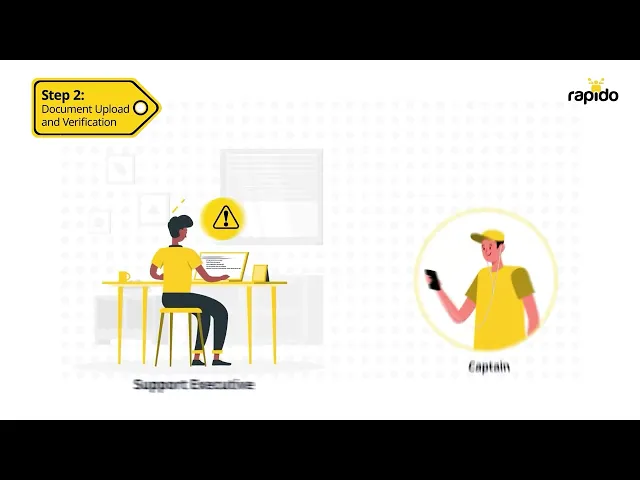
See how HSF helped Rapido deliver clear, engaging L&D training that supports employee learning and retention. Watch the video:
How US L&D Teams Measure Retention Impact from Video Training
Measurement is essential for gaining leadership buy-in and sustaining investment in learning initiatives. US L&D teams use clear performance indicators to connect learning outcomes with retention, productivity, and workforce stability. These insights help decision-makers understand how training contributes to long-term business value rather than short-term engagement alone. These are the key metrics used to measure retention impact from video production services:
Training completion rates: Tracks how many employees finish assigned videos, signaling relevance and clarity, while helping leaders assess adoption, engagement quality, and ROI from video production services investments.
Time-to-productivity metrics: Measures how quickly employees apply learned skills, proving whether training accelerates onboarding, confidence, and performance improvements compared with traditional approaches using video production services effectively.
Internal mobility and promotion rates: Evaluates career progression outcomes, showing whether video learning enables skill growth, readiness for advanced roles, and internal promotions supported by scalable video production services initiatives.
Employee engagement survey scores: Uses feedback data to connect training experiences with motivation, satisfaction, and emotional connection, helping leadership assess engagement trends influenced by video production services across organizations.
Voluntary attrition reduction post-training: Compares turnover rates before and after training programs, demonstrating how effective learning reduces voluntary exits and strengthens retention through video production services for modern enterprises.
Read more: How to Measure the Effectiveness of L&D Videos
Choosing the Right Video Production Partner for L&D Programs
Selecting the right video production partner is critical because even the best learning strategy can fail without strong execution. Poor audio, unclear visuals, or inconsistent messaging reduce credibility and learner trust. High-quality production ensures training content feels professional, engaging, and aligned with enterprise standards, which directly influences learner adoption and retention.
Execution quality also affects learning outcomes. According to a LinkedIn Workplace Learning Report, 94% of employees say they would stay longer at a company that invests in learning, reinforcing the need for polished, impactful training experiences. When videos are thoughtfully designed and well-produced, employees are more likely to complete, remember, and apply what they learn.
An effective partner should bring enterprise L&D expertise, support AI-driven and interactive formats, collaborate closely on instructional design, deliver globally with localization, and maintain consistent quality at scale.
Future Trends in L&D Video and Employee Retention: 2026 and Beyond
The future of L&D video is shaped by smarter technology, deeper personalization, and stronger alignment with business outcomes. As employee expectations evolve, L&D teams are expected to deliver learning experiences that are timely, relevant, and measurable. Video will continue to play a central role in building skill confidence, engagement, and long-term retention across distributed workforces.
L&D teams are preparing for a future where video learning is intelligent, embedded, and deeply connected to employee experience. As organizations focus on long-term workforce stability, video strategies are evolving to support personalization, relevance, and measurable impact. The next phase of L&D video will blend technology, storytelling, and data to strengthen engagement and retention at scale.
Emerging technology trends in L&D video:
AI-generated personalization at scale
Adaptive learning paths driven by real-time data
Mixed reality simulations for skill practice
Embedded videos inside everyday work tools
Automation for scalable content updates
Experience-led retention strategies using video:
Story-driven leadership communication
Human-centered onboarding experiences
Continuous learning beyond formal training
Peer-led knowledge sharing through video
Emotionally engaging content that builds trust
Read more: How to Use Data to Improve Your L&D Video Strategy
Why U.S. L&D Teams Partner with House Sparrow Films for Video Learning
House Sparrow Films collaborates with U.S. Learning and Development teams to create video strategies that directly support employee retention and long-term engagement. The focus stays on instructional clarity, human storytelling, and workplace relevance rather than generic training visuals. Each video asset is planned around role-specific learning needs, behavioral outcomes, and measurable performance indicators that leadership teams can track.
With experience delivering enterprise-scale projects globally, House Sparrow Films supports microlearning, interactive video, animated explainers, and AI-enabled training formats. Its global delivery model allows U.S. organizations to scale consistent learning experiences across teams while maintaining quality, authenticity, and cultural relevance throughout production.
Conclusion
U.S. L&D teams are using video not only to train employees but to retain, engage, and grow them over time. Video-first learning builds stronger skill confidence, emotional connection, and ongoing development, helping employees feel supported in their roles. As organizations evaluate how l&d teams in the US use video to improve employee retention, it is clear that learning becomes more effective when it feels relevant, human, and accessible across daily workflows.
Retention outcomes improve when video learning is strategically designed and consistently executed. Working with experienced House Sparrow Films teams allows organizations to build scalable, high-impact learning ecosystems. Reach out to HSF to create video programs that support long-term employee retention and growth.
FAQs
What role does video play in improving employee retention for L&D teams?
Video creates engaging learning experiences that build skill confidence, emotional connection, and ongoing development, helping employees feel supported and more likely to stay long term.Why are US L&D teams shifting from static training to video-based learning?
Video improves attention, completion rates, and knowledge retention while supporting personalized learning needs across remote, hybrid, and skills-first work environments.How does video learning support engagement in remote and hybrid workplaces?
Video delivers consistent messaging, human interaction, and accessible learning that helps employees feel connected, motivated, and aligned regardless of physical location.What types of training content perform best in video-based L&D programs?
Microlearning videos, onboarding content, leadership communication, simulations, and short explainers perform best due to clarity, relevance, and ease of application.How can organizations scale video learning without losing quality?
Organizations scale effectively by using standardized formats, strong instructional design, experienced production partners, and continuous performance feedback loops.
Key takeaways
Employee retention is now a core outcome measured by modern L&D teams.
Video-based learning increases engagement, completion rates, and long-term knowledge retention.
Personalized, short-form videos help employees learn faster and stay motivated.
Human-centered and interactive videos strengthen trust, onboarding, and workplace connection.
Data-driven video learning helps organizations measure impact and improve retention strategies.
Learning and Development (L&D) teams in the US are placing greater emphasis on employee retention as a direct outcome of their training efforts. Traditional static training formats no longer capture learner attention or match the needs of a dispersed workforce. Modern L&D strategies show how L&D teams in the US use video to improve employee retention by shifting toward immersive, engaging formats that help workers feel valued and supported in their career paths. Research shows that 94% of employees say they would stay longer at a company that invests in their learning and development, like robust video training programs, such as those used in 2026 corporate learning strategies
Video learning is now outperforming text content in knowledge retention and engagement. By prioritizing video production services that align with learner preferences, US L&D teams are improving retention rates and boosting organizational performance. This shift signals a strategic use of video as a core tool for talent development and long-term employee commitment.
Why Employee Retention Has Become a Core L&D Metric in the US
Employee retention has shifted into a measurable business priority as attrition costs continue to rise across U.S. organizations. Replacing skilled employees affects productivity, customer experience, and operational continuity. L&D teams are now accountable for helping employees build relevant skills, feel supported, and see clear long-term growth within the organization through L&D video production in the USA.
Remote and hybrid work models have introduced new engagement challenges, while skills-first hiring requires continuous learning beyond onboarding. To address these shifts, L&D teams increasingly rely on business video services to deliver scalable, engaging training experiences that support employee retention across distributed teams.
How Video Directly Impacts Learning Engagement and Retention
Video learning strengthens engagement by combining visuals, sound, and storytelling, making complex concepts easier to understand and remember. When training feels clear and relatable, employees build confidence in their skills and apply learning faster on the job. Partnering with an experienced animated video company allows L&D teams to create consistent, human-centered content that resonates emotionally, improves focus, and supports long-term retention across diverse learner groups.
Training Format | Completion Rate | Knowledge Retention | Employee Satisfaction |
Text-Based LMS | ~20% | Low | Inconsistent |
Live Sessions | 40–50% | Medium | Schedule dependent |
Video Learning | 70–80% | High | Consistently positive |
Read more: The Science of Retention: Why Video Works for L&D
Key Video Strategies US L&D Teams Use to Improve Retention
US L&D teams are moving beyond basic training delivery and adopting strategy-driven video learning to directly influence engagement and retention. Video is no longer used only for knowledge transfer but as a tool to support confidence, connection, and long-term skill development. These approaches help align learning with business outcomes while supporting diverse, distributed teams. Below are the key video strategies US L&D teams are using to improve employee retention.
Schedule a consultation with House Sparrow Films to explore how these strategies can be implemented for your workforce.
Personalized Learning Paths Powered by AI Video
One-size-fits-all training often fails because it ignores role differences, skill gaps, and real workplace challenges. US L&D teams now use AI-powered video to deliver targeted learning experiences that feel relevant and actionable for each employee.
Role-based video modules mapped to job responsibilities
Location and compliance-specific video variations
AI avatars delivering consistent leadership messaging at scale
On-demand, just-in-time video resources inside daily workflows
Microlearning and Bite-Sized Video Content
Shrinking attention spans and mobile-first consumption habits have pushed L&D teams to adopt shorter, focused video formats. Microlearning allows employees to learn without disrupting their workflow.
Ideal video length under six minutes
Completion rates reach 80% with microlearning videos
Engagement drops sharply after 12 minutes
Works well for policy updates, tools training, and refreshers
Interactive and Gamified Video Learning Experiences
Interactive video transforms passive viewing into active participation, which improves motivation and long-term recall. US enterprises increasingly use gamification to keep learners involved.
In-video quizzes every 60–90 seconds
Branching scenarios for decision-based learning
Gamification elements like badges and leaderboards
Engagement lift of up to 48% in U.S. enterprises
Human-Centric and Immersive Video Onboarding
The first 90 days play a critical role in employee retention. Video-based onboarding helps new hires feel connected, informed, and confident from the start.
Authentic leadership videos build trust early
87% of learners prefer real human speakers over AI-only delivery
VR-based video simulations for complex or high-risk roles
Faster confidence and performance ramp-up
Employee-Generated Video Content and Peer Learning
Many US L&D teams are decentralizing content creation to capture real expertise from within the organization. Employee-generated videos make learning more relatable and collaborative.
SMEs record quick how-to videos and walkthroughs
Peer-to-peer video learning is preferred by 38% of employees
Builds internal community and shared ownership
Strengthens culture and belonging, key retention drivers
See how HSF helped Rapido deliver clear, engaging L&D training that supports employee learning and retention. Watch the video:
How US L&D Teams Measure Retention Impact from Video Training
Measurement is essential for gaining leadership buy-in and sustaining investment in learning initiatives. US L&D teams use clear performance indicators to connect learning outcomes with retention, productivity, and workforce stability. These insights help decision-makers understand how training contributes to long-term business value rather than short-term engagement alone. These are the key metrics used to measure retention impact from video production services:
Training completion rates: Tracks how many employees finish assigned videos, signaling relevance and clarity, while helping leaders assess adoption, engagement quality, and ROI from video production services investments.
Time-to-productivity metrics: Measures how quickly employees apply learned skills, proving whether training accelerates onboarding, confidence, and performance improvements compared with traditional approaches using video production services effectively.
Internal mobility and promotion rates: Evaluates career progression outcomes, showing whether video learning enables skill growth, readiness for advanced roles, and internal promotions supported by scalable video production services initiatives.
Employee engagement survey scores: Uses feedback data to connect training experiences with motivation, satisfaction, and emotional connection, helping leadership assess engagement trends influenced by video production services across organizations.
Voluntary attrition reduction post-training: Compares turnover rates before and after training programs, demonstrating how effective learning reduces voluntary exits and strengthens retention through video production services for modern enterprises.
Read more: How to Measure the Effectiveness of L&D Videos
Choosing the Right Video Production Partner for L&D Programs
Selecting the right video production partner is critical because even the best learning strategy can fail without strong execution. Poor audio, unclear visuals, or inconsistent messaging reduce credibility and learner trust. High-quality production ensures training content feels professional, engaging, and aligned with enterprise standards, which directly influences learner adoption and retention.
Execution quality also affects learning outcomes. According to a LinkedIn Workplace Learning Report, 94% of employees say they would stay longer at a company that invests in learning, reinforcing the need for polished, impactful training experiences. When videos are thoughtfully designed and well-produced, employees are more likely to complete, remember, and apply what they learn.
An effective partner should bring enterprise L&D expertise, support AI-driven and interactive formats, collaborate closely on instructional design, deliver globally with localization, and maintain consistent quality at scale.
Future Trends in L&D Video and Employee Retention: 2026 and Beyond
The future of L&D video is shaped by smarter technology, deeper personalization, and stronger alignment with business outcomes. As employee expectations evolve, L&D teams are expected to deliver learning experiences that are timely, relevant, and measurable. Video will continue to play a central role in building skill confidence, engagement, and long-term retention across distributed workforces.
L&D teams are preparing for a future where video learning is intelligent, embedded, and deeply connected to employee experience. As organizations focus on long-term workforce stability, video strategies are evolving to support personalization, relevance, and measurable impact. The next phase of L&D video will blend technology, storytelling, and data to strengthen engagement and retention at scale.
Emerging technology trends in L&D video:
AI-generated personalization at scale
Adaptive learning paths driven by real-time data
Mixed reality simulations for skill practice
Embedded videos inside everyday work tools
Automation for scalable content updates
Experience-led retention strategies using video:
Story-driven leadership communication
Human-centered onboarding experiences
Continuous learning beyond formal training
Peer-led knowledge sharing through video
Emotionally engaging content that builds trust
Read more: How to Use Data to Improve Your L&D Video Strategy
Why U.S. L&D Teams Partner with House Sparrow Films for Video Learning
House Sparrow Films collaborates with U.S. Learning and Development teams to create video strategies that directly support employee retention and long-term engagement. The focus stays on instructional clarity, human storytelling, and workplace relevance rather than generic training visuals. Each video asset is planned around role-specific learning needs, behavioral outcomes, and measurable performance indicators that leadership teams can track.
With experience delivering enterprise-scale projects globally, House Sparrow Films supports microlearning, interactive video, animated explainers, and AI-enabled training formats. Its global delivery model allows U.S. organizations to scale consistent learning experiences across teams while maintaining quality, authenticity, and cultural relevance throughout production.
Conclusion
U.S. L&D teams are using video not only to train employees but to retain, engage, and grow them over time. Video-first learning builds stronger skill confidence, emotional connection, and ongoing development, helping employees feel supported in their roles. As organizations evaluate how l&d teams in the US use video to improve employee retention, it is clear that learning becomes more effective when it feels relevant, human, and accessible across daily workflows.
Retention outcomes improve when video learning is strategically designed and consistently executed. Working with experienced House Sparrow Films teams allows organizations to build scalable, high-impact learning ecosystems. Reach out to HSF to create video programs that support long-term employee retention and growth.
FAQs
What role does video play in improving employee retention for L&D teams?
Video creates engaging learning experiences that build skill confidence, emotional connection, and ongoing development, helping employees feel supported and more likely to stay long term.Why are US L&D teams shifting from static training to video-based learning?
Video improves attention, completion rates, and knowledge retention while supporting personalized learning needs across remote, hybrid, and skills-first work environments.How does video learning support engagement in remote and hybrid workplaces?
Video delivers consistent messaging, human interaction, and accessible learning that helps employees feel connected, motivated, and aligned regardless of physical location.What types of training content perform best in video-based L&D programs?
Microlearning videos, onboarding content, leadership communication, simulations, and short explainers perform best due to clarity, relevance, and ease of application.How can organizations scale video learning without losing quality?
Organizations scale effectively by using standardized formats, strong instructional design, experienced production partners, and continuous performance feedback loops.