Key Takeaways
Video-based training improves efficiency, consistency, and workforce performance.
Scalable learning videos reduce costs while supporting rapid organizational growth.
On-demand video learning minimizes disruptions and boosts employee productivity.
Strong video training programs increase engagement and employee retention.
Professional training videos deliver long-term ROI for U.S. businesses.
US companies are increasingly using training videos to accelerate workforce upskilling with measurable impact. How US companies use training videos to upskill employees faster is shaped by a shift toward flexible, on-demand learning that fits real work conditions. Microlearning videos deliver targeted lessons employees can watch as needed, helping them build new skills without disrupting workflows.
Many organizations also adopt AI-driven personalized video paths, using platforms that tailor content to individual needs and skill gaps, a trend reinforced by insights from the LinkedIn Workplace Learning Report highlighting agile, data-informed learning strategies. Interactive videos with embedded quizzes and scenarios boost engagement and retention, while VR and AR simulations enable safe practice for complex or high-risk tasks. Screen recording tutorials support faster software and technical mastery. Together, these video-based approaches help US companies upskill employees faster, improve engagement, support retention, and align learning with strategic business outcomes.
Why US Companies Are Rethinking Employee Upskilling
US companies are rethinking employee upskilling as technology evolves, market demands shift, and remote work reshapes how teams operate. Traditional training models are often expensive, slow to update, and poorly aligned with real job needs. Employees now expect learning that is flexible, relevant, and tailored to their career paths. As a result, organizations are moving toward agile formats like corporate training videos, microlearning modules, and interactive digital platforms. These approaches deliver skills faster, fit into busy schedules, and are easier to measure. By focusing on timely, practical upskilling, businesses can close talent gaps, boost engagement, and build a workforce ready for both current challenges and future growth.
Read more: How Corporate Training Videos Support Franchise and Partner Training
The Science Behind Faster Learning With Training Videos
Training videos enhance learning efficiency by engaging multiple senses, improving comprehension, and accelerating skill retention. Employees learn faster when information is delivered visually, audibly, and interactively.
Dual Coding and Multisensory Learning : Combining visual and auditory inputs activates multiple cognitive pathways, making it easier to process complex information, remember concepts longer, and apply skills more effectively in real-world scenarios.
Repetition and Microlearning: Bite-sized video lessons reduce cognitive overload, and the ability to pause, rewind, or rewatch content reinforces learning. Repetition strengthens memory retention and accelerates mastery of new skills.
Active Engagement and Interactivity: Interactive elements like quizzes, branching scenarios, and prompts require learners to participate actively. Engaged learners retain information better, apply skills faster, and develop confidence in their abilities.
Simulations and Practical Application : VR, AR, and screen-recorded demonstrations let employees practice high-risk or technical tasks safely. Experiential learning bridges theory and practice, enhancing both competence and confidence on the job.
Read more: How to Use Corporate Training Videos to Reinforce Company Values
How US Companies Use Training Videos to Upskill Employees Faster
US companies are leveraging training videos to accelerate skill development, improve retention, and scale learning efficiently. By combining microlearning, AI personalization, interactivity, simulations, and technical demonstrations, organizations can upskill employees faster and more effectively.
Microlearning and Just-In-Time Training Videos
Short, focused lessons deliver essential knowledge in under 5 10 minutes, accessible anytime, reducing downtime while reinforcing skills in real-world scenarios.
Positioning: Quick, targeted learning delivered exactly when employees need it, ideal for fast-paced environments and workflow-specific training.
Best for:
Rapid skill updates
Onboarding
Just-in-time training
What to look for in their work:
Concise, clear content
Easily digestible modules
Mobile-friendly accessibility
AI-Driven Personalized Training Video Paths
Uses AI to analyze learner performance and skill gaps, delivering tailored content sequences that maximize relevance and retention.
Positioning: Adaptive, data-driven training that meets individual learning needs, ideal for personalized skill development and performance improvement.
Best for:
Individualized learning
Efficiency-focused upskilling
High-skill roles
What to look for in their work:
Adaptive content
Progress tracking
Analytics-driven personalization
Interactive Training Videos That Require Active Participation
Embeds quizzes, branching scenarios, and prompts to engage learners, encouraging active learning and improving knowledge retention and confidence.
Positioning: Engaging, participation-driven training for learners who benefit from hands-on decision-making and scenario-based exercises.
Best for:
Compliance training
Scenario-based learning
Engagement-focused modules
What to look for in their work:
Interactive elements
Immediate feedback
Real-world relevance
VR and AR Simulations for High-Risk and Skill-Intensive Roles
Provides safe, immersive practice for dangerous or complex tasks, building hands-on skills and decision-making without real-world risk.
Positioning: Immersive training for high-risk or technically complex roles, ideal for skill mastery and safety-critical tasks.
Best for:
Safety training
Technical skills
Hands-on roles
What to look for in their work:
Realistic environments
Scenario variety
Measurable outcomes
Screen Recording Videos for Technical and Software Upskilling
Step-by-step demonstrations of software, tools, and workflows, allowing employees to follow along at their own pace and reduce trial-and-error.
Positioning: Clear, practical video guides for technical and software skill development, ideal for self-paced upskilling.
Best for:
Software training
Technical onboarding
Workflow proficiency
What to look for in their work:
Clear visuals
Stepwise guidance
Practical, applicable examples
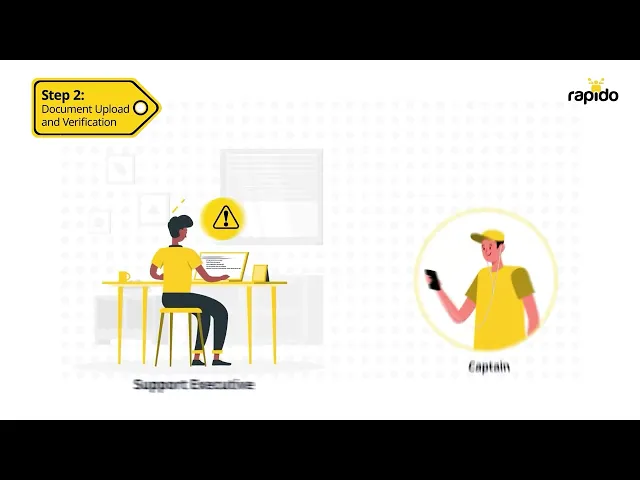
See how House Sparrow Films partnered with Rapido to create L&D training videos that simplify complex concepts, support faster skill adoption, and help teams learn consistently at scale.
Measuring Upskilling Speed and Training ROI With Video Analytics
Video analytics enable companies to track employee engagement, knowledge retention, and skill acquisition speed, providing clear insights into training effectiveness and helping quantify ROI for strategic learning investments.
Completion Rate: Measures the percentage of employees who finish a training video. High completion indicates engagement and content relevance, and helps identify videos that need improvement or restructuring to improve retention.
Quiz and Assessment Scores: Tracks knowledge retention after video training. Scores reveal which concepts employees understand and which they struggle with, guiding content updates and personalized learning paths to maximize effectiveness.
Time to Competency: Monitors how long employees take to achieve required skill levels. Shorter times indicate faster upskilling, while longer durations highlight areas for additional support or content refinement.
Engagement Metrics: Includes views, watch time, and interactions. High engagement reflects learner interest and video effectiveness, helping organizations replicate successful strategies and improve underperforming training content.
ROI and Performance Impact: Connects training to business outcomes such as productivity, error reduction, or revenue growth. Demonstrates tangible value of video learning, supporting budget allocation and future training decisions.
When training videos are planned with measurement in mind, analytics stop being a report and start becoming a decision tool. Clear structure, intentional pacing, and defined learning signals make it easier to see what drives faster upskilling. This is the approach House Sparrow Films uses when building training videos that teams can evaluate, improve, and scale over time.
Why Training Videos Scale Better for Growing US Companies
Training videos provide a scalable solution for companies expanding teams, locations, or product lines. Unlike traditional classroom training, videos ensure consistent messaging and skill development across all employees, regardless of location. They allow simultaneous onboarding and upskilling, saving time and reducing costs. Videos can be updated quickly to reflect new processes or compliance requirements, ensuring knowledge stays current. By combining accessibility, consistency, and flexibility, training videos help growing US companies efficiently develop a skilled, confident, and high-performing workforce.
Read more: How Chesterfield Health Scaled Training with Video - A Case Study
How House Sparrow Films Supports High-Impact Training Video Production
House Sparrow Films helps companies create engaging, results-driven training videos that accelerate employee upskilling. From concept development and scripting to storyboarding and motion graphics, their team ensures content is clear, concise, and tailored to specific learning objectives. They incorporate interactive elements, microlearning techniques, and immersive VR/AR simulations to enhance retention and practical application. Every video is optimized for accessibility, scalability, and measurable outcomes, enabling HR and L&D teams to track engagement and ROI. By combining creativity with data-driven design, House Sparrow Films produces high-impact training videos that educate, inspire, and empower employees to perform at their best.
Conclusion
Training videos have transformed how US companies upskill employees, combining efficiency, scalability, and measurable outcomes. By leveraging microlearning, AI-driven personalization, interactive elements, VR/AR simulations, and step-by-step technical guides, organizations can accelerate skill acquisition while keeping employees engaged and confident. Video analytics allow tracking progress, identifying knowledge gaps, and quantifying ROI, ensuring training investments deliver real business value. Companies that adopt video-based learning can scale workforce development, maintain consistent standards across locations, and adapt quickly to evolving skill requirements. Partner with House Sparrow Films to create high-impact, results-driven training videos that upskill your workforce faster and more effectively than ever.
FAQs
How do training videos help companies upskill employees faster?
Training videos deliver information visually and on demand, allowing employees to learn at their own pace. This reduces downtime, improves retention, and helps teams apply new skills immediately.
Are training videos effective for remote and hybrid teams?
Yes. Training videos provide consistent learning experiences regardless of location. They ensure every employee receives the same guidance, making them ideal for distributed and remote workforces.
What types of training videos work best for corporate learning?
Short microlearning videos, animated explainers, screencast tutorials, and interactive scenario-based videos are widely used because they match modern attention spans and real workplace needs.
Do training videos reduce overall training costs?
Training videos significantly lower costs by eliminating travel, instructor fees, and repeated sessions. Once created, they can be reused, updated, and scaled across teams.
Why should companies partner with a professional video production company?
A professional partner ensures training videos are clear, engaging, and aligned with learning goals. High-quality production improves understanding, retention, and long-term value from training investments.
Key Takeaways
Video-based training improves efficiency, consistency, and workforce performance.
Scalable learning videos reduce costs while supporting rapid organizational growth.
On-demand video learning minimizes disruptions and boosts employee productivity.
Strong video training programs increase engagement and employee retention.
Professional training videos deliver long-term ROI for U.S. businesses.
US companies are increasingly using training videos to accelerate workforce upskilling with measurable impact. How US companies use training videos to upskill employees faster is shaped by a shift toward flexible, on-demand learning that fits real work conditions. Microlearning videos deliver targeted lessons employees can watch as needed, helping them build new skills without disrupting workflows.
Many organizations also adopt AI-driven personalized video paths, using platforms that tailor content to individual needs and skill gaps, a trend reinforced by insights from the LinkedIn Workplace Learning Report highlighting agile, data-informed learning strategies. Interactive videos with embedded quizzes and scenarios boost engagement and retention, while VR and AR simulations enable safe practice for complex or high-risk tasks. Screen recording tutorials support faster software and technical mastery. Together, these video-based approaches help US companies upskill employees faster, improve engagement, support retention, and align learning with strategic business outcomes.
Why US Companies Are Rethinking Employee Upskilling
US companies are rethinking employee upskilling as technology evolves, market demands shift, and remote work reshapes how teams operate. Traditional training models are often expensive, slow to update, and poorly aligned with real job needs. Employees now expect learning that is flexible, relevant, and tailored to their career paths. As a result, organizations are moving toward agile formats like corporate training videos, microlearning modules, and interactive digital platforms. These approaches deliver skills faster, fit into busy schedules, and are easier to measure. By focusing on timely, practical upskilling, businesses can close talent gaps, boost engagement, and build a workforce ready for both current challenges and future growth.
Read more: How Corporate Training Videos Support Franchise and Partner Training
The Science Behind Faster Learning With Training Videos
Training videos enhance learning efficiency by engaging multiple senses, improving comprehension, and accelerating skill retention. Employees learn faster when information is delivered visually, audibly, and interactively.
Dual Coding and Multisensory Learning : Combining visual and auditory inputs activates multiple cognitive pathways, making it easier to process complex information, remember concepts longer, and apply skills more effectively in real-world scenarios.
Repetition and Microlearning: Bite-sized video lessons reduce cognitive overload, and the ability to pause, rewind, or rewatch content reinforces learning. Repetition strengthens memory retention and accelerates mastery of new skills.
Active Engagement and Interactivity: Interactive elements like quizzes, branching scenarios, and prompts require learners to participate actively. Engaged learners retain information better, apply skills faster, and develop confidence in their abilities.
Simulations and Practical Application : VR, AR, and screen-recorded demonstrations let employees practice high-risk or technical tasks safely. Experiential learning bridges theory and practice, enhancing both competence and confidence on the job.
Read more: How to Use Corporate Training Videos to Reinforce Company Values
How US Companies Use Training Videos to Upskill Employees Faster
US companies are leveraging training videos to accelerate skill development, improve retention, and scale learning efficiently. By combining microlearning, AI personalization, interactivity, simulations, and technical demonstrations, organizations can upskill employees faster and more effectively.
Microlearning and Just-In-Time Training Videos
Short, focused lessons deliver essential knowledge in under 5 10 minutes, accessible anytime, reducing downtime while reinforcing skills in real-world scenarios.
Positioning: Quick, targeted learning delivered exactly when employees need it, ideal for fast-paced environments and workflow-specific training.
Best for:
Rapid skill updates
Onboarding
Just-in-time training
What to look for in their work:
Concise, clear content
Easily digestible modules
Mobile-friendly accessibility
AI-Driven Personalized Training Video Paths
Uses AI to analyze learner performance and skill gaps, delivering tailored content sequences that maximize relevance and retention.
Positioning: Adaptive, data-driven training that meets individual learning needs, ideal for personalized skill development and performance improvement.
Best for:
Individualized learning
Efficiency-focused upskilling
High-skill roles
What to look for in their work:
Adaptive content
Progress tracking
Analytics-driven personalization
Interactive Training Videos That Require Active Participation
Embeds quizzes, branching scenarios, and prompts to engage learners, encouraging active learning and improving knowledge retention and confidence.
Positioning: Engaging, participation-driven training for learners who benefit from hands-on decision-making and scenario-based exercises.
Best for:
Compliance training
Scenario-based learning
Engagement-focused modules
What to look for in their work:
Interactive elements
Immediate feedback
Real-world relevance
VR and AR Simulations for High-Risk and Skill-Intensive Roles
Provides safe, immersive practice for dangerous or complex tasks, building hands-on skills and decision-making without real-world risk.
Positioning: Immersive training for high-risk or technically complex roles, ideal for skill mastery and safety-critical tasks.
Best for:
Safety training
Technical skills
Hands-on roles
What to look for in their work:
Realistic environments
Scenario variety
Measurable outcomes
Screen Recording Videos for Technical and Software Upskilling
Step-by-step demonstrations of software, tools, and workflows, allowing employees to follow along at their own pace and reduce trial-and-error.
Positioning: Clear, practical video guides for technical and software skill development, ideal for self-paced upskilling.
Best for:
Software training
Technical onboarding
Workflow proficiency
What to look for in their work:
Clear visuals
Stepwise guidance
Practical, applicable examples
See how House Sparrow Films partnered with Rapido to create L&D training videos that simplify complex concepts, support faster skill adoption, and help teams learn consistently at scale.
Measuring Upskilling Speed and Training ROI With Video Analytics
Video analytics enable companies to track employee engagement, knowledge retention, and skill acquisition speed, providing clear insights into training effectiveness and helping quantify ROI for strategic learning investments.
Completion Rate: Measures the percentage of employees who finish a training video. High completion indicates engagement and content relevance, and helps identify videos that need improvement or restructuring to improve retention.
Quiz and Assessment Scores: Tracks knowledge retention after video training. Scores reveal which concepts employees understand and which they struggle with, guiding content updates and personalized learning paths to maximize effectiveness.
Time to Competency: Monitors how long employees take to achieve required skill levels. Shorter times indicate faster upskilling, while longer durations highlight areas for additional support or content refinement.
Engagement Metrics: Includes views, watch time, and interactions. High engagement reflects learner interest and video effectiveness, helping organizations replicate successful strategies and improve underperforming training content.
ROI and Performance Impact: Connects training to business outcomes such as productivity, error reduction, or revenue growth. Demonstrates tangible value of video learning, supporting budget allocation and future training decisions.
When training videos are planned with measurement in mind, analytics stop being a report and start becoming a decision tool. Clear structure, intentional pacing, and defined learning signals make it easier to see what drives faster upskilling. This is the approach House Sparrow Films uses when building training videos that teams can evaluate, improve, and scale over time.
Why Training Videos Scale Better for Growing US Companies
Training videos provide a scalable solution for companies expanding teams, locations, or product lines. Unlike traditional classroom training, videos ensure consistent messaging and skill development across all employees, regardless of location. They allow simultaneous onboarding and upskilling, saving time and reducing costs. Videos can be updated quickly to reflect new processes or compliance requirements, ensuring knowledge stays current. By combining accessibility, consistency, and flexibility, training videos help growing US companies efficiently develop a skilled, confident, and high-performing workforce.
Read more: How Chesterfield Health Scaled Training with Video - A Case Study
How House Sparrow Films Supports High-Impact Training Video Production
House Sparrow Films helps companies create engaging, results-driven training videos that accelerate employee upskilling. From concept development and scripting to storyboarding and motion graphics, their team ensures content is clear, concise, and tailored to specific learning objectives. They incorporate interactive elements, microlearning techniques, and immersive VR/AR simulations to enhance retention and practical application. Every video is optimized for accessibility, scalability, and measurable outcomes, enabling HR and L&D teams to track engagement and ROI. By combining creativity with data-driven design, House Sparrow Films produces high-impact training videos that educate, inspire, and empower employees to perform at their best.
Conclusion
Training videos have transformed how US companies upskill employees, combining efficiency, scalability, and measurable outcomes. By leveraging microlearning, AI-driven personalization, interactive elements, VR/AR simulations, and step-by-step technical guides, organizations can accelerate skill acquisition while keeping employees engaged and confident. Video analytics allow tracking progress, identifying knowledge gaps, and quantifying ROI, ensuring training investments deliver real business value. Companies that adopt video-based learning can scale workforce development, maintain consistent standards across locations, and adapt quickly to evolving skill requirements. Partner with House Sparrow Films to create high-impact, results-driven training videos that upskill your workforce faster and more effectively than ever.
FAQs
How do training videos help companies upskill employees faster?
Training videos deliver information visually and on demand, allowing employees to learn at their own pace. This reduces downtime, improves retention, and helps teams apply new skills immediately.
Are training videos effective for remote and hybrid teams?
Yes. Training videos provide consistent learning experiences regardless of location. They ensure every employee receives the same guidance, making them ideal for distributed and remote workforces.
What types of training videos work best for corporate learning?
Short microlearning videos, animated explainers, screencast tutorials, and interactive scenario-based videos are widely used because they match modern attention spans and real workplace needs.
Do training videos reduce overall training costs?
Training videos significantly lower costs by eliminating travel, instructor fees, and repeated sessions. Once created, they can be reused, updated, and scaled across teams.
Why should companies partner with a professional video production company?
A professional partner ensures training videos are clear, engaging, and aligned with learning goals. High-quality production improves understanding, retention, and long-term value from training investments.